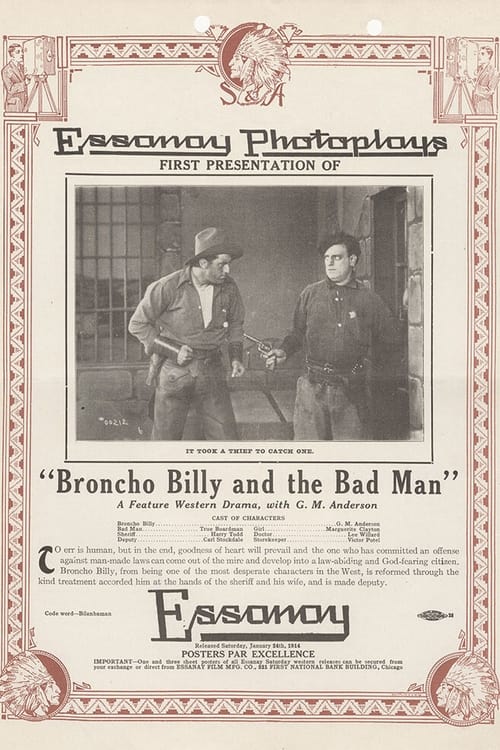
Broncho Billy and the Bad Man
Plot
To err is human, but in the end, goodness of heart will prevail and the one who has committed an offense against man-made laws may come out of the mire and develop into a law abiding and god-fearing citizen. Broncho Billy, from being one of the most desperate characters in the west, is reformed through the kind treatment accorded him at the hands of the sheriff and his wife, and is made deputy.
Get the Weekly Woke Watchlist
New and trending movies scored for woke bias, preachy messaging, and forced political themes — before you waste your evening.
No spam. One useful email per week.
Overall Series Review
Categorical Breakdown
The plot centers on the universal theme of individual moral transformation, where the character Broncho Billy is judged by the 'goodness of heart' prevailing over his past lawless actions. Character is defined by soul and moral change, not immutable characteristics, race, or intersectional status. The narrative is a classic story of meritocracy and personal redemption.
The central conflict resolves with the outlaw Broncho Billy becoming a deputy and a 'law abiding citizen,' fully embracing the institutions of law and order and the community represented by the sheriff and his wife. The home culture (the law-abiding community) is framed as the redemptive and superior moral choice, not fundamentally corrupt.
The female character, the sheriff's wife, acts as a complementary civilizing force through the 'kind treatment accorded him' which aids in the male outlaw’s reform. Her influence stems from her supportive role within the traditional nuclear unit. The narrative celebrates masculinity in its protective form (the Sheriff) and supportive femininity (the Wife), aligning with a complementary structure.
The narrative is entirely focused on a male outlaw, a sheriff, and the sheriff's wife as the moral center. The structure is entirely normative, centering the traditional male-female pairing as the catalyst for the protagonist's reform into a 'law abiding and god-fearing citizen'. There is no reference or deconstruction of the nuclear family or alternative sexual ideologies.
The movie explicitly states that the goal of the reformation is for Broncho Billy to become a 'god-fearing citizen'. This affirms a belief in a transcendent moral order and faith as a positive source of individual strength and social good. Moral law is objective and essential to being a good citizen.
Get the Weekly Woke Watchlist
New and trending movies scored for woke bias, preachy messaging, and forced political themes — before you waste your evening.
No spam. One useful email per week.