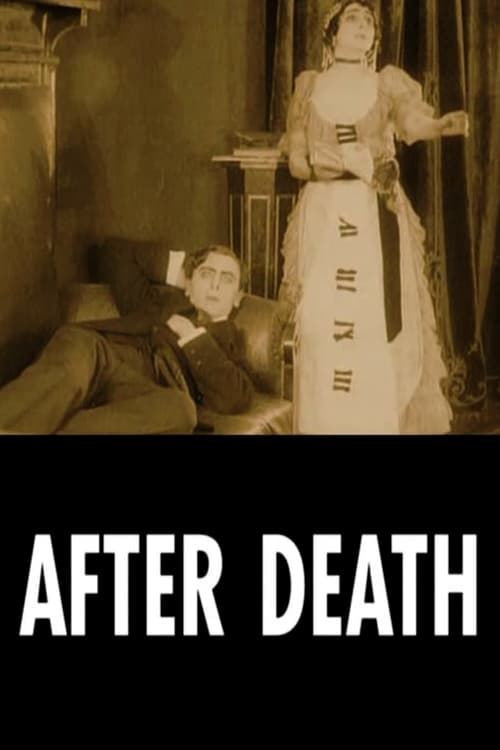
After Death
Plot
Young scholar Andrei, fascinated by haunting actress Zoia Kadmina, is surprised when she sends him a note. The two have a brief scheduled meeting, then three months later Andrei is shocked to learn she has died. He becomes obsessed with Zoia's memory and decides he must find out all that he can about her.
Get the Weekly Woke Watchlist
New and trending movies scored for woke bias, preachy messaging, and forced political themes — before you waste your evening.
No spam. One useful email per week.
Overall Series Review
Categorical Breakdown
The narrative focuses on the internal psychological drama of two individuals in early 20th-century Russian society. The plot is driven by personal attraction and rejection, not by race, intersectional characteristics, or systemic oppression.
The film functions as a psychological and social critique of contemporary Russian gender dynamics, specifically the fear and rejection of the 'new woman' by the 'patriarchal male.' This is a bleak internal commentary on a specific aspect of the home culture’s social order, but it does not frame the entire civilization as fundamentally corrupt or evil.
The actress Zoia Kadmina is explicitly portrayed as a confident, unconventional 'new woman' who actively pursues the man she desires. The male lead, Andrei, is consistently depicted as a socially inept, infantile, and passive figure whose fear of female autonomy leads him to reject the real woman. The story ironically frames the male's psychological paralysis and subsequent obsession with the idealized, dependent version of the dead woman, which strongly criticizes the patriarchal male.
The film’s core conflict is a traditional male-female romantic and obsessive relationship. There are no themes of alternative sexualities, queer theory, or gender identity ideology present in the narrative.
The story's gothic and psychological themes incorporate spiritual/supernatural elements with dreams, apparitions, and the suggestion of the dead intruding on the living. This focus is on personal morbidity and the fantastic, not on actively attacking, vilifying, or critiquing traditional religion or faith.
Get the Weekly Woke Watchlist
New and trending movies scored for woke bias, preachy messaging, and forced political themes — before you waste your evening.
No spam. One useful email per week.