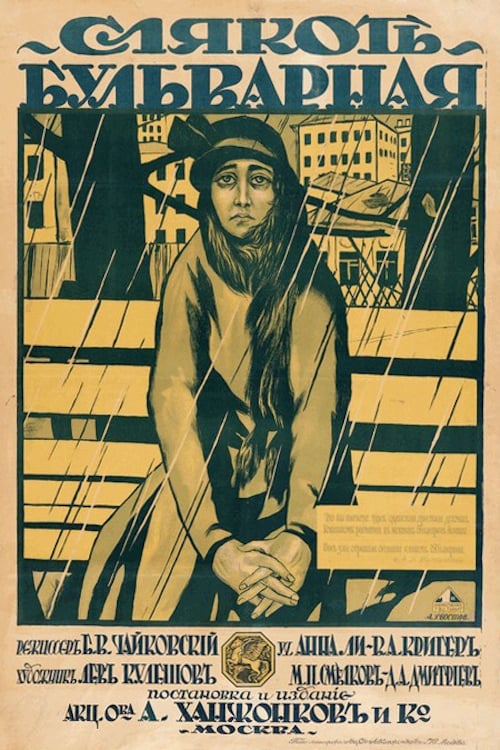
Boulevard Slush
Plot
Get the Weekly Woke Watchlist
New and trending movies scored for woke bias, preachy messaging, and forced political themes — before you waste your evening.
No spam. One useful email per week.
Overall Series Review
Categorical Breakdown
Characters are judged by their personal moral choices and the content of their soul, not by immutable characteristics. The central conflict is the wife's individual moral collapse. No plot points exist to lecture on systemic oppression or vilify a specific race.
The narrative focuses its critique on the spiritual and moral decadence of the bourgeois class rather than the entire home civilization or nation. The story functions as a warning against social chaos and personal decay, not a deconstruction of heritage or demonization of ancestors.
The female lead rejects the role of wife and pursues a life of radical independence and decadence. This path is portrayed as destructive, culminating in her death by suicide, which directly counteracts the 'Girl Boss' trope where female careerism and independence are celebrated as ultimate fulfillment. The man is not shown as incompetent or toxic.
The core of the dramatic conflict centers on the destructive choices of a woman within a traditional male-female pairing (wife of a poet). The structure is normative. No alternative sexualities are centered, and there is no lecturing on gender theory or framing of the nuclear family as oppressive.
The tragic ending—the heroine taking poison—provides a moral consequence for her life of decadence and abandonment. This framework acknowledges an objective moral truth, where certain behaviors lead to ruin, which stands in direct opposition to moral relativism.
Get the Weekly Woke Watchlist
New and trending movies scored for woke bias, preachy messaging, and forced political themes — before you waste your evening.
No spam. One useful email per week.