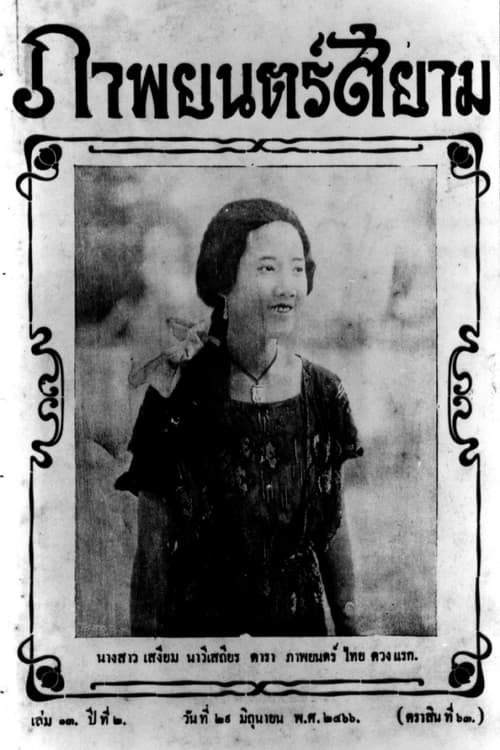
Miss Suwanna of Siam
Plot
The film is a romance about a young woman named Suwanna who is the object of affection for many men. In her search for true love, she has many adventures and mishaps, including overcoming her father's disapproval, before finally finding her soulmate. It was one of first feature films to be made in Thailand, and was the first Hollywood co-production in Thailand. Unfortunately, nothing of the film exists today except for some promotional materials and other ephemera held at the Thailand National Film Archive.
Get the Weekly Woke Watchlist
New and trending movies scored for woke bias, preachy messaging, and forced political themes — before you waste your evening.
No spam. One useful email per week.
Overall Series Review
Categorical Breakdown
The film stars an all-Siamese cast and is set in Siam, centering a non-Western culture without any indication of 'race-swapping' or vilification of 'whiteness.' The conflict focuses on personal and melodrama issues like a father's disapproval and a long-lost heir, not on race-based or intersectional systemic oppression. The casting is historically and geographically authentic to the narrative's setting.
Contemporary reviews described the film as a 'first-class advertisement' for Siam, showcasing its modernities, palaces, and cultural sites like wats. This indicates a celebration and promotion of the home culture and nation. The narrative does not frame the local culture as fundamentally corrupt or morally inferior.
The protagonist, Suwanna, is a woman of agency who drives the plot by seeking true love and overcoming her father's disapproval to find her soulmate. Her agency is focused on a traditionally feminine goal—finding love and establishing a complementary pair ('lovers wandering off hand in hand'). This narrative avoids both the perfect 'Girl Boss' trope and outright anti-family or anti-natalist messaging.
The plot summary reveals the film is a heterosexual romance melodrama focused on a woman's search for her soulmate and overcoming obstacles to love. There is no evidence from the surviving descriptions or the 1923 context to suggest the inclusion of alternative sexualities, gender ideology, or the deconstruction of the nuclear family.
As a classic melodrama, the plot includes traditional moral concepts like innocence, false accusation, revenge, and justice, suggesting a clear, objective moral framework. The setting prominently features traditional Siamese sites, including wats (temples), treating the cultural landscape, which includes religion, as a natural and accepted part of the environment, not a source of evil or bigotry.
Get the Weekly Woke Watchlist
New and trending movies scored for woke bias, preachy messaging, and forced political themes — before you waste your evening.
No spam. One useful email per week.