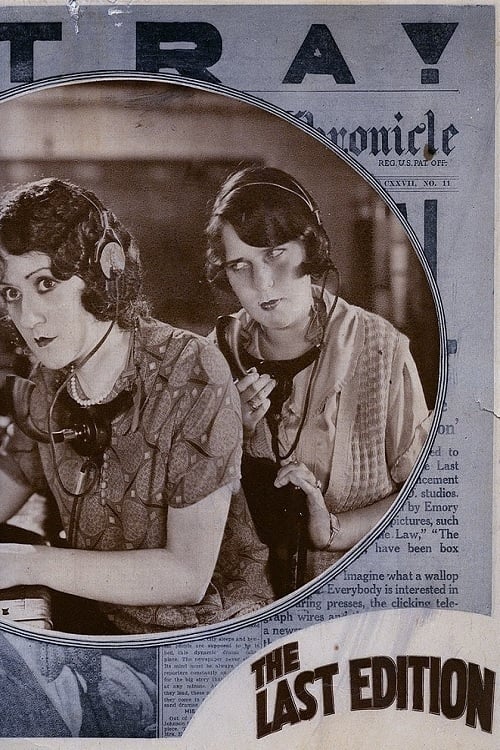
The Last Edition
Plot
A twenty-year veteran of the printing room of The San Francisco Chronicle is passed up for a promotion at the same time his son is accused of graft and involved in scandal. The historical landmarks of old San Francisco are present: The Pacific Telephone and Telegraph Building, City Hall and the Pickwick Hotel-- but they don't distract from the dramatic and emotional perforamces at the film's center.
Get the Weekly Woke Watchlist
New and trending movies scored for woke bias, preachy messaging, and forced political themes — before you waste your evening.
No spam. One useful email per week.
Overall Series Review
Categorical Breakdown
The plot focuses on a class conflict between the overlooked working-class father and a corrupt, white-collar system of bootleggers and assistant district attorneys. Character value is defined entirely by loyalty, work ethic, and moral action. The film exhibits a universal meritocracy, with no reliance on race, intersectional characteristics, or historical vilification.
The movie is a celebration of a core American city and its institutions, shot on location at the San Francisco Chronicle and featuring numerous local landmarks. The film's hero is a man dedicated to 'truth, love and duty,' affirming the values of hard work and family loyalty as shields against chaos and corruption.
The main emotional arc centers on the professional and legal struggles of the male characters, the father Tom and his son Ray. While the daughter Polly plays an instrumental role alongside her male love interest in clearing the family name, her agency is complementary to the family's honor. There is no messaging that frames motherhood as a prison or emasculates the male lead.
The narrative's focus is entirely on a crisis of family honor and political corruption, and the sole romantic element is a traditional male-female pairing. The structure explicitly reinforces the nuclear family as the center of the story’s drama and redemption.
The story's moral framework is explicitly based on objective truth and justice, exemplified by the hero’s stated dedication to 'truth, love and duty.' The conflict is secular, involving crime and journalistic ethics, and contains no criticism of traditional religion.
Get the Weekly Woke Watchlist
New and trending movies scored for woke bias, preachy messaging, and forced political themes — before you waste your evening.
No spam. One useful email per week.