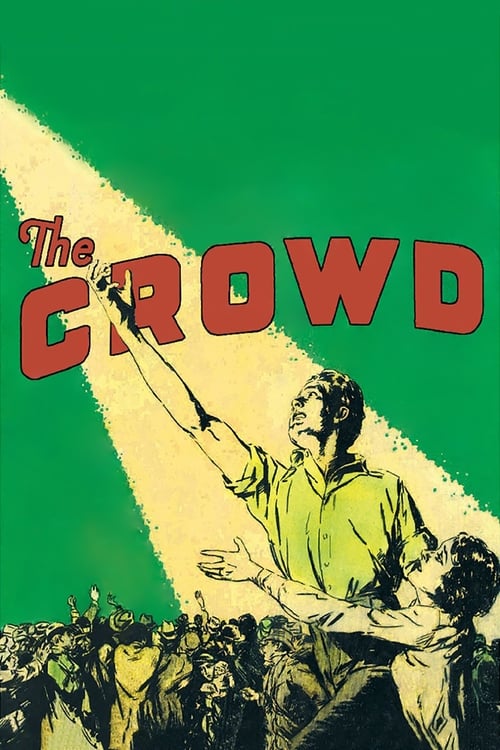
The Crowd
Plot
John, an ambitious but undisciplined New York City office worker, meets and marries Mary. They start a family, struggle to cope with marital stress, financial setbacks, and tragedy, all while lost amid the anonymous, pitiless throngs of the big city.
Get the Weekly Woke Watchlist
New and trending movies scored for woke bias, preachy messaging, and forced political themes — before you waste your evening.
No spam. One useful email per week.
Overall Series Review
Categorical Breakdown
The narrative centers on John Sims as the 'American everyman' whose struggle is purely economic and psychological against the anonymous modern crowd, not based on race or immutable characteristics. Casting is naturally colorblind for its era and setting, and all characters are judged by their personal merit and emotional content, embodying a universal meritocracy.
The film offers a strong critique of modern American capitalism and the urban machine, which frustrates the protagonist's ambition and leads to misery. This deconstruction is limited to a specific social-economic system—the 'assembly line' office and the pitiless city—rather than an overall demonization of Western civilization or its ancestors. The core institution of the family provides the final redemptive shield against chaos.
Gender roles are portrayed as traditional and complementary. John is the flawed, struggling provider, and Mary is the protective, stabilizing emotional center who endures hardship for the sake of the home and marriage. Motherhood and the nuclear family are the sources of John's ultimate moral redemption, and there is no messaging that promotes career over family or depicts men as uniformly incompetent.
The story is entirely focused on the struggles and survival of a heterosexual, traditionally married, nuclear family. There is no presence of alternative sexualities, gender ideology, or any attempt to deconstruct the male-female pairing as the normative structure.
There is no explicit hostility toward religion. The film’s conflict is secular—a man’s ambition versus the crushing anonymity of the modern city. The narrative's moral center, which provides a path out of John's despair, is the transcendent love of his son and the stabilizing force of his wife, which aligns with a search for an objective, higher moral law (love and family duty) rather than a descent into moral relativism.
Get the Weekly Woke Watchlist
New and trending movies scored for woke bias, preachy messaging, and forced political themes — before you waste your evening.
No spam. One useful email per week.