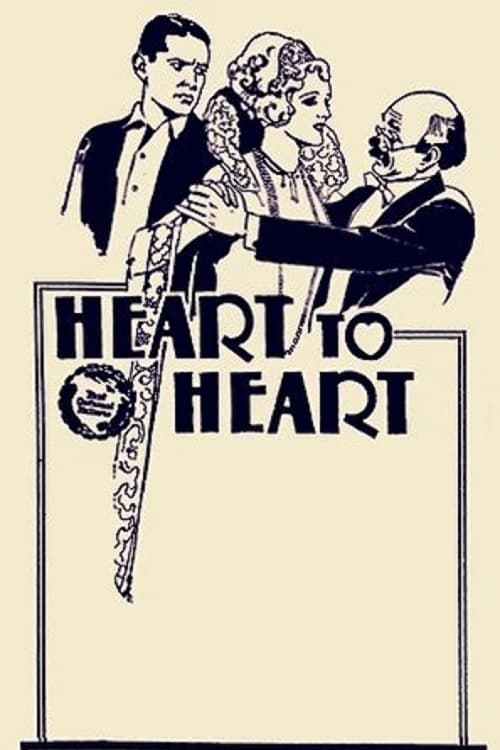
Heart to Heart
Plot
Princess Delatorre, young and beautiful widow of an Italian scion of royalty, returns with her fortune to the small American town where she grew up as Ellen Gutherie. Arriving by train a few days earlier than she planned, Ellen is mistaken for Mrs. Arden, a seamstress of doubtful repute from a neighboring town. She carries on the deception for fun when her nearsighted Aunt Katie and others believe she is Mrs. Arden. Phil, her old sweetheart, recognizes her, however, and shows her his new invention, a corkscrew that turns itself--a failure because of prohibition. Ellen leaves, having heard how much store is set on her coming; she returns on the proper train, elaborately made up as Princess Delatorre, and the big reception takes place as planned. Then she and Phil return to Italy, where they expect the corkscrew to be a success.
Get the Weekly Woke Watchlist
New and trending movies scored for woke bias, preachy messaging, and forced political themes — before you waste your evening.
No spam. One useful email per week.
Overall Series Review
Categorical Breakdown
The film features a homogenous cast and focuses entirely on individual character arcs and personal relationships. No mention of intersectional identity or systemic power dynamics exists.
The story celebrates small-town American life and the protagonist's nostalgic return to her roots. Western institutions like marriage and local community are portrayed as the foundation of the characters' lives.
Gender roles follow traditional early 20th-century norms. The female lead seeks romantic fulfillment through marriage, and the male lead is a creative inventor. There is no emasculation or modern 'girl boss' posturing.
The narrative centers on a traditional heterosexual romance and the pursuit of a nuclear family. No alternative sexual identities or gender theories are present.
The film maintains a standard moral framework of the era without attacking religious institutions or faith. The community adheres to traditional moral codes without cynicism.
Get the Weekly Woke Watchlist
New and trending movies scored for woke bias, preachy messaging, and forced political themes — before you waste your evening.
No spam. One useful email per week.