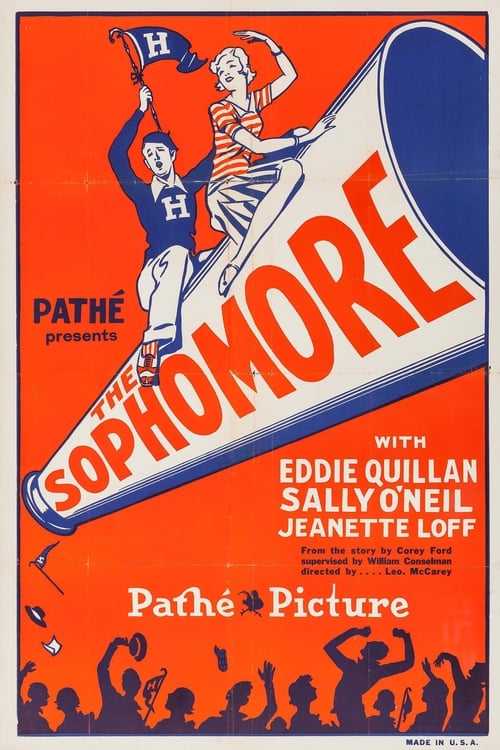
The Sophomore
Plot
Joe Collins arrives at Hanford College to begin his second year with $200 to pay his tuition, is enticed into a craps game, and loses all in this nostalgic slice of college, replete with songs, romance, prom dances and the inevitable big football game.
Get the Weekly Woke Watchlist
New and trending movies scored for woke bias, preachy messaging, and forced political themes — before you waste your evening.
No spam. One useful email per week.
Overall Series Review
Categorical Breakdown
Characters are judged by their actions, such as Joe's mistake in gambling and Margie's merit in hard work and loyalty, aligning with Universal Meritocracy. The narrative does not utilize race or other immutable characteristics to establish a hierarchy, vilify any group, or lecture on systemic oppression.
The movie is a nostalgic celebration of American college life, complete with football, dances, and a focus on traditional institutions. The atmosphere is one of gratitude toward the home culture and its rituals, portraying the university as a positive institution, which reflects a spirit of Chesterton’s Fence.
The female lead, Margie, is distinct from the modern 'Girl Boss' trope. She is capable, earning money by working a job, but her efforts are devoted to selflessly supporting the male lead's pursuit of a traditional path (college education) after his own failure. Masculinity is not systematically attacked, though the male lead is shown to make a significant error in judgment (gambling). The dynamic is complementary and vitalist.
The core of the plot focuses on a traditional male-female romance within the context of college life, football, and prom dances. The film adheres to a Normative Structure, with the nuclear family and traditional pairing as the assumed standard. There is no inclusion of or lecturing on alternative sexual or gender ideologies.
The movie is secular, focusing on the moral lesson of personal responsibility, the dangers of gambling, and the value of hard work. It promotes an objective moral truth—that losing money through reckless behavior is a mistake—without resorting to anti-religious themes or depicting Christian faith as a source of evil or bigotry.
Get the Weekly Woke Watchlist
New and trending movies scored for woke bias, preachy messaging, and forced political themes — before you waste your evening.
No spam. One useful email per week.