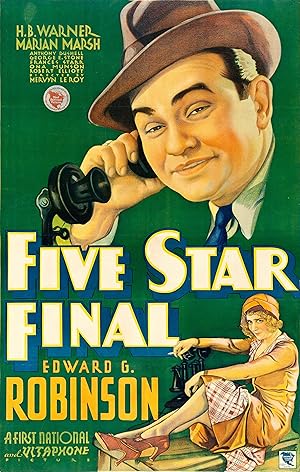
Five Star Final
Plot
Hinchcliffe, the ruthless publisher of a sleazy New York tabloid, is concerned that the ethical journalistic policies of City Editor Randall have caused a drop in circulation. He pressures the newsman to run more sensational stories including resurrecting the twenty year old Vorhees Murder Case. Although the perpetrator's actions were ultimately judged justifiable, and she has been subsequently living an exemplary life in anonymity, Hunchcliffe insists Randall revisit the story. Randall assigns Isopod, an alcoholic degenerate, to dig up anything lurid that he find. The unprincipled reporter fraudulently insinuates himself into the Vorhees' home masquerading as a minister and gets the expose he sought. Yellow journalism triumphs, and a decent woman's name gets dragged through the mud again... with tragic consequences.
Get the Weekly Woke Watchlist
New and trending movies scored for woke bias, preachy messaging, and forced political themes — before you waste your evening.
No spam. One useful email per week.
Overall Series Review
Categorical Breakdown
The narrative's focus is on journalistic ethics and corporate greed, judging characters based on their moral actions and choices rather than immutable characteristics. The film critiques the moral bankruptcy of media elites and their unprincipled reporters, who are defined by their corruption, not their race or identity.
The film acts as a defense of traditional American institutions like the private sphere, the nuclear family, and ethical conduct, which are all portrayed as being under attack by the corrupting force of yellow journalism. The critique is aimed at a specific profession (tabloid media), not the home culture, which is implicitly valued.
The main female victim, Nancy Voorhees, is sympathetic because she has built an 'exemplary life' as a devoted wife and mother, an ideal that is tragically destroyed by the newspaper. Motherhood and a loving, protective husband are the complementary standards being championed and defended by the plot, directly opposing anti-natalist or 'Girl Boss' messaging.
The story centers on traditional, normative relationships: a marriage destroyed by the public exposure of a twenty-year-old pre-marital pregnancy and murder. Alternative sexualities or the deconstruction of the nuclear family are not present or addressed by the plot.
The antagonist reporter, Isopod, gains access by fraudulently posing as a minister after having been expelled from divinity school for sexual misconduct. This serves to critique religious hypocrisy and exploitation of trust, but not faith itself as the root of evil. The overall theme is a high-minded moral call for objective right and wrong in the face of greed.
Get the Weekly Woke Watchlist
New and trending movies scored for woke bias, preachy messaging, and forced political themes — before you waste your evening.
No spam. One useful email per week.