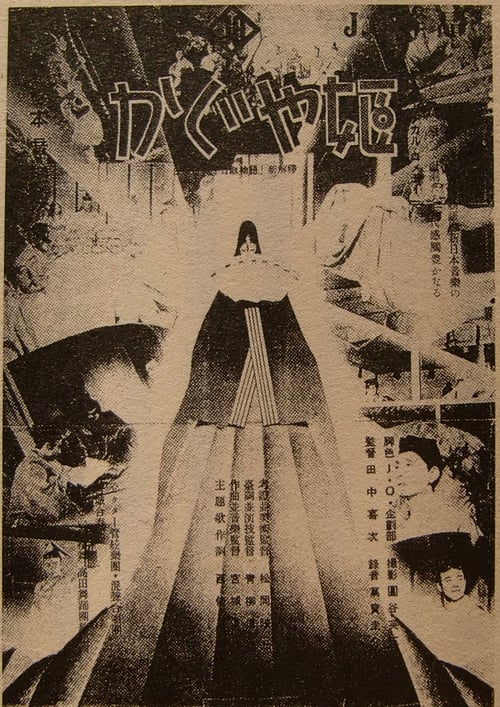
Kaguya Hime
Plot
Toho's production of the classic Japanese fairytale.
Get the Weekly Woke Watchlist
New and trending movies scored for woke bias, preachy messaging, and forced political themes — before you waste your evening.
No spam. One useful email per week.
Overall Series Review
Categorical Breakdown
The film is a 1935 Japanese production of a Japanese folktale, set in historical Japan. The cast is historically and culturally authentic. There is no 'whiteness' to vilify and no forced diversity. Character conflict revolves around class aspiration (the foster father) and the heroine’s celestial nature, not immutable characteristics.
The film is Japanese and critiques a specific, corrupt element of its own past—the materialistic Heian-era aristocracy—by contrasting it with the simple, virtuous life of the village. The Moon people are celestial, not an external 'alien' culture designed to lecture on a fundamentally corrupt 'home culture.' The heroine's desire to stay on Earth reflects a valuation of her human experience.
The core of the story revolves around the heroine, Kaguya, rejecting five high-status male suitors and even the Emperor by setting them impossible tasks, demonstrating significant female agency and effectively emasculating the men of the court. However, she is ultimately taken against her will by a celestial force, which subverts the modern 'Girl Boss' perfection trope. Motherhood is not a plot point and is neither celebrated nor condemned as a 'prison.'
The plot is a traditional romantic pursuit narrative, featuring a heroine sought after by male suitors and the Emperor. The narrative structure is entirely normative and focuses on traditional male-female pairing. There is no presence of alternative sexual ideologies, deconstruction of the nuclear family (the foster parents are a stable, loving couple), or gender theory lecturing.
The narrative culminates with a celestial, spiritual force (the Moon/Heavenly beings, which in the full folktale have Buddhist overtones) intervening to recall the Princess. This spiritual realm is depicted as a place of objective, divine law and duty, not moral relativism. Faith or the transcendent moral order is a source of narrative conclusion, not a root of evil.
Get the Weekly Woke Watchlist
New and trending movies scored for woke bias, preachy messaging, and forced political themes — before you waste your evening.
No spam. One useful email per week.