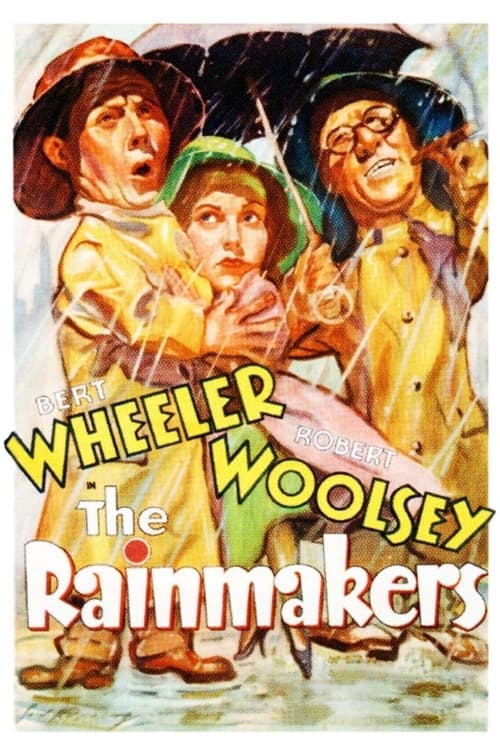
The Rainmakers
Plot
Roscoe the Rainmaker is invited to California (with sidekick "Billy") to relieve a terrible dry spell and to save the community from an unscrupulous businessman who stands to profit from the drought
Get the Weekly Woke Watchlist
New and trending movies scored for woke bias, preachy messaging, and forced political themes — before you waste your evening.
No spam. One useful email per week.
Overall Series Review
Categorical Breakdown
The film’s central conflict is purely economic and moral: selfless heroes trying to save a community from a greedy, land-exploiting businessman. Characters are judged entirely on their moral actions and competence, representing universal meritocracy. There is no focus on immutable characteristics, race, or systemic oppression, and the casting reflects the demographic homogeneity of Hollywood films from the 1930s without any political messaging.
The narrative explicitly champions the American farming community and its residents, framing the town as an ancestral home that must be defended from the chaotic forces of greed and natural disaster. The villain is an individual capitalist predator, not a symbol used to demonize Western institutions, ancestors, or the broader culture. Core Western institutions like private property and community are upheld and protected by the heroes.
The female lead is a 'cute-as-a-button' love interest who is part of a secondary romantic plot and provides support to the male hero, a role which is complementary and traditional to the era. The main plot is centered entirely around the male comedians and their efforts, preventing the female character from being a 'Girl Boss' or 'Mary Sue' figure. No anti-family or anti-natalist themes are present; the film depicts traditional courtship.
The movie is a 1935 comedy centered on a rainmaking scheme and a land-fraud plot. The primary romantic storyline features a traditional male-female pairing. There is no presence of alternative sexualities, a deconstruction of the nuclear family, or any form of gender ideology lecturing. The structure is entirely normative.
The plot's conflict is entirely material—drought, land fraud, and pseudo-science rainmaking—not religious. The morality is clearly defined by objective good (saving the town) versus objective evil (exploiting the drought for financial gain). The film does not contain any vilification of religion, and its moral framework acknowledges objective right and wrong, aligning with a transcendent moral law.
Get the Weekly Woke Watchlist
New and trending movies scored for woke bias, preachy messaging, and forced political themes — before you waste your evening.
No spam. One useful email per week.