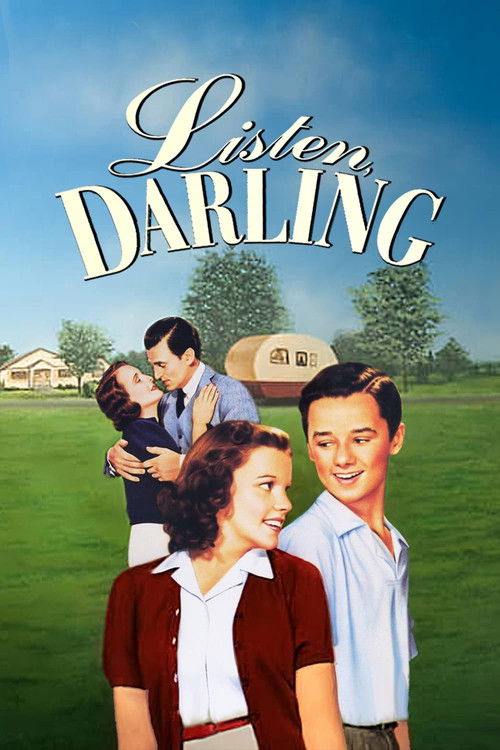
Listen, Darling
Plot
To stop Pinkie's widowed, struggling mother Dottie from marrying a well-off older man they know she doesn't love, teenager Pinkie and her best friend Buzz kidnap her in the family travel trailer to live a carefree life on the open road. They then get the idea to find Dottie a financially secure husband whom both she and Pinkie would like.
Get the Weekly Woke Watchlist
New and trending movies scored for woke bias, preachy messaging, and forced political themes — before you waste your evening.
No spam. One useful email per week.
Overall Series Review
Categorical Breakdown
The film centers on a white, middle-class family during the time of its release. Race and immutable characteristics are not themes. Characters are judged solely by their personal merits and emotional sincerity; the banker is disliked for his lack of romance, not his privilege. The story supports Universal Meritocracy.
The narrative is a celebration of the traditional, loving family unit, which the children actively fight to protect from financial necessity. The film does not frame Western culture or its institutions as fundamentally corrupt, and the conflict is purely personal, not civilizational.
The score is a 2 because the teenage girl, Pinkie, takes the most aggressive and dominant action (the 'kidnapping') to decide her mother's fate. However, the mother's initial motivation is traditional maternal sacrifice for her children's security, and the film's positive resolution celebrates the mother finding a complementary male partner who provides love and protection, reinforcing the nuclear family structure. Motherhood is viewed as a celebrated, core identity.
The entire plot revolves around finding a new, loving, and financially secure heterosexual husband for a widowed mother. There is no mention, centering, or advocacy for alternative sexualities or gender ideology, maintaining a normative structure regarding marriage and family.
The film is a simple, sentimental melodrama whose moral compass is clearly objective: marrying for love is good; marrying only for money is bad. There is no content or dialogue that shows hostility toward religion, nor is there an embrace of moral relativism.
Get the Weekly Woke Watchlist
New and trending movies scored for woke bias, preachy messaging, and forced political themes — before you waste your evening.
No spam. One useful email per week.