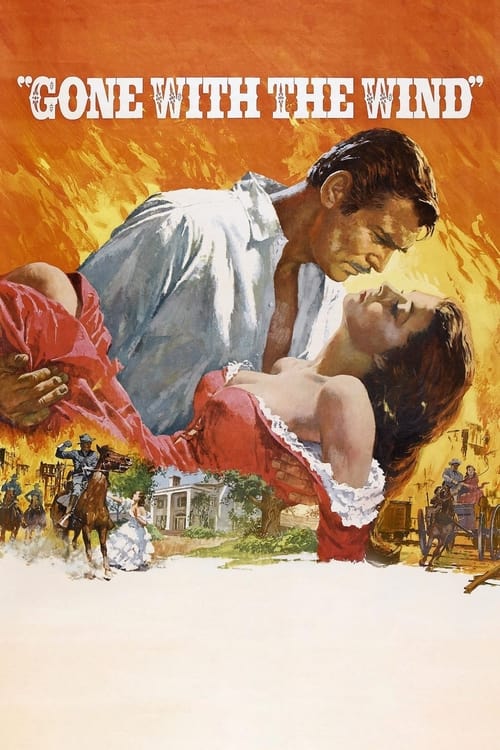
Gone with the Wind
Plot
The spoiled daughter of a Georgia plantation owner conducts a tumultuous romance with a cynical profiteer during the American Civil War and Reconstruction Era.
Get the Weekly Woke Watchlist
New and trending movies scored for woke bias, preachy messaging, and forced political themes — before you waste your evening.
No spam. One useful email per week.
Overall Series Review
Categorical Breakdown
The narrative centers on a white Southern experience and relies on racist archetypes and historical falsehoods, which is the opposite of the intersectional lens. Black characters are relegated to contented servant roles and are defined by painful racial stereotypes. The perspective does not vilify 'whiteness' or lecture on systemic oppression in the contemporary sense; instead, it valorizes the pre-war social structure.
The film is a nostalgic and powerful romanticization of a specific culture and time—the Old South. Western institutions, such as the family plantation and the Southern aristocracy, are framed as idyllic and beautiful, with their destruction being the great tragedy of the story. The Northern invaders (Yankees and Carpetbaggers) are frequently depicted as mean, corrupt, or incompetent destroyers, promoting a strong sense of cultural loyalty.
The lead character, Scarlett O'Hara, is an ambitious, capitalistic survivor who aggressively rejects the expected roles of a Southern lady. She pursues career and financial independence over domesticity and marriage, and is openly disdainful of motherhood and family life as hindrances to her ambition. However, the film contrasts her with a virtuous and maternal character, Melanie, presenting a traditional ideal alongside the 'Girl Boss' figure.
The film is entirely focused on traditional male-female pairings and the dynamics of heterosexual romance and marriage. There is no presence of alternative sexualities, deconstruction of the nuclear family via queer theory, or lecturing on gender ideology.
Traditional morality is a fundamental framework for the story. The central moral conflict for the protagonist involves her selfishness versus the saintly virtue of her friend, Melanie, who is explicitly modeled on a religious figure. Faith, though often misapplied by Scarlett for selfish gain, is acknowledged as a source of moral structure and objective truth.
Get the Weekly Woke Watchlist
New and trending movies scored for woke bias, preachy messaging, and forced political themes — before you waste your evening.
No spam. One useful email per week.