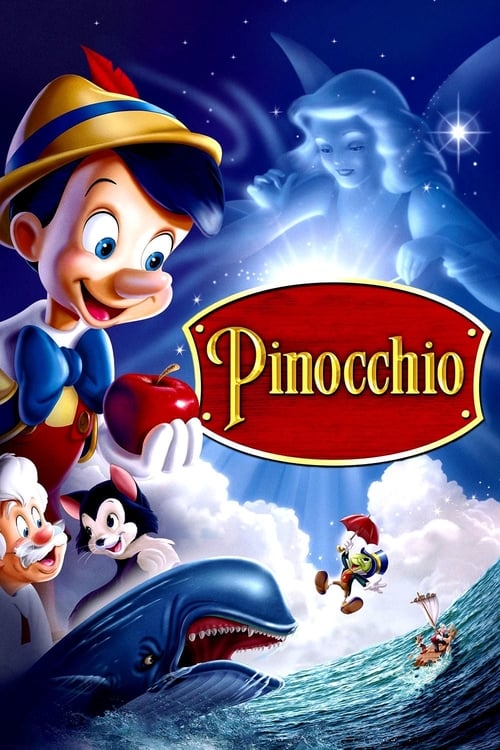
Pinocchio
Plot
When the gentle woodcarver Geppetto builds a marionette to be his substitute son, a benevolent fairy brings the toy to life. The puppet, named Pinocchio, is not yet a human boy. He must earn the right to be real by proving that he is brave, truthful, and unselfish.
Get the Weekly Woke Watchlist
New and trending movies scored for woke bias, preachy messaging, and forced political themes — before you waste your evening.
No spam. One useful email per week.
Overall Series Review
Categorical Breakdown
The plot focuses entirely on universal meritocracy and character development, requiring Pinocchio to prove his worth by being brave, truthful, and unselfish. Characters are judged strictly by the content of their soul and their moral choices, not by race or an intersectional hierarchy. There is no vilification of the primary white, Western European-style male character, Geppetto, who is a loving and dedicated father figure.
The film champions the traditional home and the virtues associated with it. Geppetto’s workshop is depicted as a warm, detailed, and loving environment, symbolizing the home as a safe shield against the chaos and corruption of the outside world. The narrative promotes classic middle-class values like deferred gratification, perseverance, and thrift. The journey is an attempt to escape the perils of the manipulative outside world (Pleasure Island, Stromboli) and return to the safety and discipline of the family.
Gender roles are complementarian. Geppetto is the masculine, dedicated craftsman and protective father, while the Blue Fairy is an ethereal, benevolent force who enables the father’s wish and imposes a moral code for the son’s journey. There is no "Girl Boss" trope or emasculation of the male figures, nor is there any anti-natal or anti-family messaging. The entire goal is the completion of a traditional father-son family unit.
The narrative centers on the formation of a traditional father-son, male-female (implied, by the ending) nuclear family structure. Sexuality is not a plot factor. There is no presence of sexual ideology, deconstruction of the family, or commentary on gender theory directed at the child audience.
The entire story is a morality play, championing a transcendent moral order that must be followed to achieve humanity. The Blue Fairy acts as a celestial, guiding figure who introduces an objective higher moral law ("brave, truthful, unselfish"). Pinocchio’s own body enforces objective truth via the nose-growth mechanism. The message is one of objective truth and faith in the power of conscience, directly opposing moral relativism.
Get the Weekly Woke Watchlist
New and trending movies scored for woke bias, preachy messaging, and forced political themes — before you waste your evening.
No spam. One useful email per week.