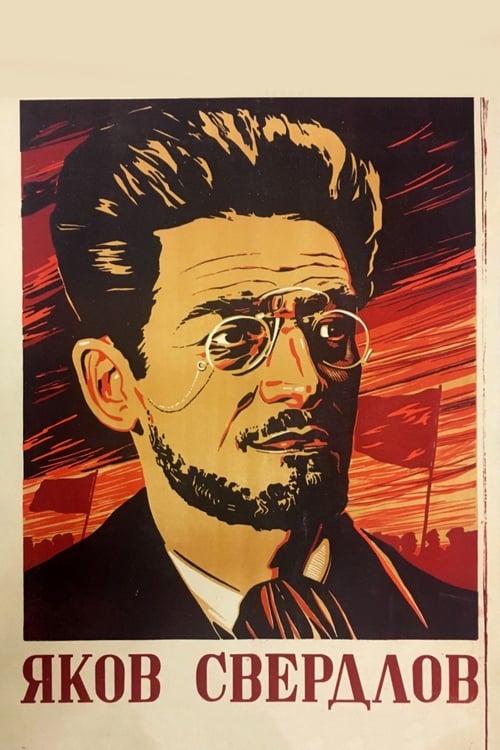
Yakov Sverdlov
Plot
Get the Weekly Woke Watchlist
New and trending movies scored for woke bias, preachy messaging, and forced political themes — before you waste your evening.
No spam. One useful email per week.
Overall Series Review
Categorical Breakdown
The narrative relies heavily on class identity, replacing race with economic status to establish a political hierarchy where the proletariat is inherently virtuous and the bourgeoisie/Tsarist authorities are systematically oppressive, incompetent, and evil. Characters are judged solely by their revolutionary class-loyalty.
The plot celebrates the total rejection and violent destruction of the existing Russian home culture, government (Tsarism), and ancestral institutions. The established civilization is framed as fundamentally corrupt and oppressive, which must be annihilated to build the new, superior Soviet future.
The film centers on the political and organizational struggle led by male figures like Yakov Sverdlov and Lenin. Female characters are not central to the political action, and there is no evidence of a 'Girl Boss' trope or an anti-natalist/anti-family message dominating the narrative.
Themes of alternative sexualities, gender ideology, or deconstruction of the nuclear family are entirely absent. The film focuses strictly on the political, historical, and class-based narrative of the Russian Revolution.
The core ideological victory celebrated by the film, Bolshevism, is explicitly anti-theistic and materialist. The moral law is defined by the political goals and expediency of the Party, completely rejecting traditional faith and transcendent morality in favor of a subjective, politically-dictated truth.
Get the Weekly Woke Watchlist
New and trending movies scored for woke bias, preachy messaging, and forced political themes — before you waste your evening.
No spam. One useful email per week.