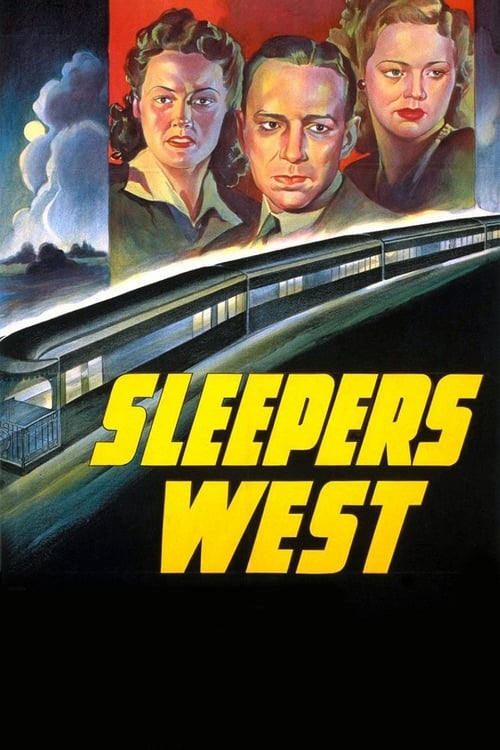
Sleepers West
Plot
Private eye Mike Shayne encounters a large amount of trouble while attempting to guard a murder witness.
Get the Weekly Woke Watchlist
New and trending movies scored for woke bias, preachy messaging, and forced political themes — before you waste your evening.
No spam. One useful email per week.
Overall Series Review
Categorical Breakdown
The plot centers entirely on moral character—a corrupt politician versus an incorruptible detective—and the legal concept of justice. Character merit determines whether a person is good or evil. Race, class, or immutable characteristics play no role in the conflict or characterization. All key roles reflect the standard Hollywood casting practices of the 1940s without any perceived modern political agenda.
The story is a defense of core Western values, specifically the integrity of the justice system and the rule of law. The main character, a private eye, fights to expose a powerful, corrupt domestic politician. The narrative frames American institutions as fundamentally good but susceptible to individual corruption, requiring individual heroism to set right, not as fundamentally corrupt or racist.
The primary female character, Kay Bentley, is an independent and ambitious 'ace reporter' with a strong career focus, embodying a level of professional agency common in 1940s cinema. She is, however, depicted as flawed for prioritizing her story over an innocent man's life, and she eventually submits to the moral authority and protective actions of the male hero, Michael Shayne. The male lead is consistently portrayed as competent and protective. The witness, Helen Carlson, is a difficult and less-than-virtuous figure, not a 'Girl Boss' archetype.
The narrative is a straight-forward detective thriller focused on a crime, the legal system, and the heterosexual relationship between the detective and the reporter. The structure centers on traditional male-female romantic and social pairings. There is no presence of alternative sexual ideology, gender theory, or deconstruction of the nuclear family unit.
The conflict is purely secular: a quest for justice in a murder trial against political corruption. The entire dramatic tension relies on the objective moral truth that an innocent man must be saved and a corrupt man exposed. The plot acknowledges a higher moral law—the sanctity of life and justice—with no explicit criticism or hostility toward religion or faith as a source of strength.
Get the Weekly Woke Watchlist
New and trending movies scored for woke bias, preachy messaging, and forced political themes — before you waste your evening.
No spam. One useful email per week.