Angels of Sin
Plot
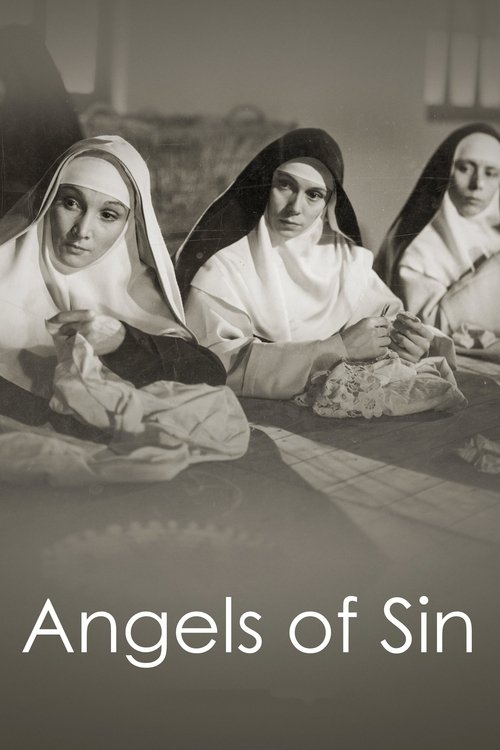
A well-off young woman decides to become a nun, joining a convent that rehabilitates female prisoners. Through their program, she meets a woman named Thérèse who refuses any help because she says she was innocent of the crime she was convicted for. After being released from prison, Thérèse murders the actual perpetrator of the crime and comes to seek sanctuary in the convent.
Get the Weekly Woke Watchlist
New and trending movies scored for woke bias, preachy messaging, and forced political themes — before you waste your evening.
No spam. One useful email per week.
Overall Series Review
Categorical Breakdown
The narrative is driven by an internal, spiritual struggle between the wealthy novice Anne-Marie and the bitter, criminal Thérèse, framing their conflict around moral and spiritual condition rather than immutable characteristics or intersectional hierarchy. The focus is on universal spiritual truth and individual actions, not on race or class as systemic oppression.
The film does not engage in civilizational self-hatred. The French Dominican convent, a core Western and Christian institution, is presented as a sanctuary and a center of moral purpose. The struggle is internal and spiritual, suggesting the need for individual redemption, not that the entire Western culture is fundamentally corrupt or racist.
The movie is set in a female-only environment (a convent) where women hold all positions of authority (Prioress, nuns). While it eschews the nuclear family, this is for a traditional religious vocation, not an anti-natalist political stance. Characters like Anne-Marie are complex, flawed, and zealous, not instant 'Girl Boss' Mary Sues. The focus is on distinct, complementary spiritual roles for women within a religious order.
The narrative centers entirely on themes of crime, justice, religious faith, and spiritual redemption. There is no presence of alternative sexualities, deconstruction of the nuclear family as a political concept, or discussion of gender ideology. The character dynamics are entirely consistent with the normative structure of the 1940s religious setting.
The core theme is the power of traditional religious piety, sacrifice, and grace. The film was co-written with a Dominican priest and is a serious examination of Catholic faith, treating it as the source of transcendent morality and a path to salvation. The Christian characters, though flawed in their human zealotry, are on a path toward objective spiritual truth.
Get the Weekly Woke Watchlist
New and trending movies scored for woke bias, preachy messaging, and forced political themes — before you waste your evening.
No spam. One useful email per week.