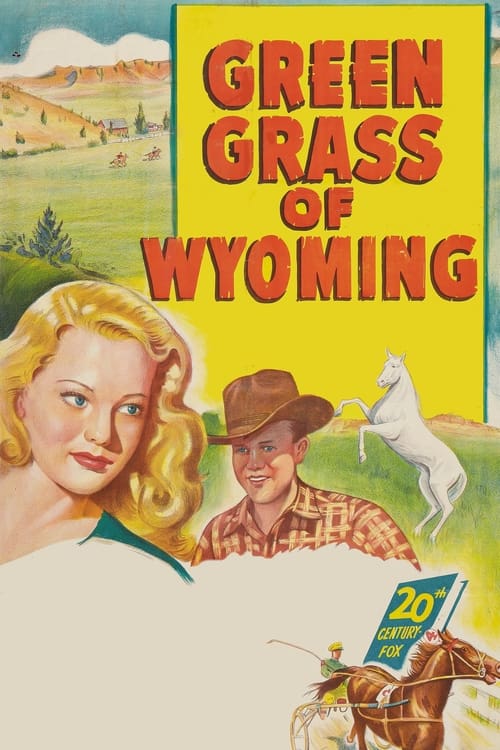
Green Grass of Wyoming
Plot
The romance of a rancher's niece and a rival rancher's son parallels that of a stallion and a mare.
Get the Weekly Woke Watchlist
New and trending movies scored for woke bias, preachy messaging, and forced political themes — before you waste your evening.
No spam. One useful email per week.
Overall Series Review
Categorical Breakdown
The narrative centers entirely on the personal growth and merit of the main characters, Ken McLaughlin and Carey Greenway. The conflicts are based on ranch rivalry and responsibility, not on race or any immutable characteristic. All characters are judged by their integrity and efforts, such as Ken training his horse and Grandpa Beaver overcoming his drinking problem to race.
The film acts as a celebration of the American Western tradition, ranching culture, and the family unit. The McLaughlin family is depicted as the protective institution that shields the younger generation from chaos by teaching responsibility. The natural setting of Wyoming is presented as beautiful and a site of enduring, positive cultural heritage.
The gender dynamics are complementary; the mother, Nell McLaughlin, is a source of emotional and pragmatic wisdom who encourages her son's growth. The female lead, Carey, is a supportive romantic partner. The story's ultimate thematic resolution, symbolized by the mare Crown Jewel's pregnancy, celebrates a traditional, pro-natal outcome, without any 'Girl Boss' or anti-male messaging.
The primary human relationship is a traditional male-female pairing between Ken and Carey, and the primary animal storyline centers on the mating of the male stallion Thunderhead and the female mare Crown Jewel, culminating in pregnancy. The narrative structure is entirely normative, affirming the traditional male-female pairing and the nuclear family as the standard structure.
The moral framework is based on transcendent values like responsibility, hard work, patience, and faith, with the character arcs focusing on moral growth and redemption, such as Grandpa Beaver’s turn from drinking. The film avoids moral relativism and does not portray traditional religion or its adherents with any hostility.
Get the Weekly Woke Watchlist
New and trending movies scored for woke bias, preachy messaging, and forced political themes — before you waste your evening.
No spam. One useful email per week.