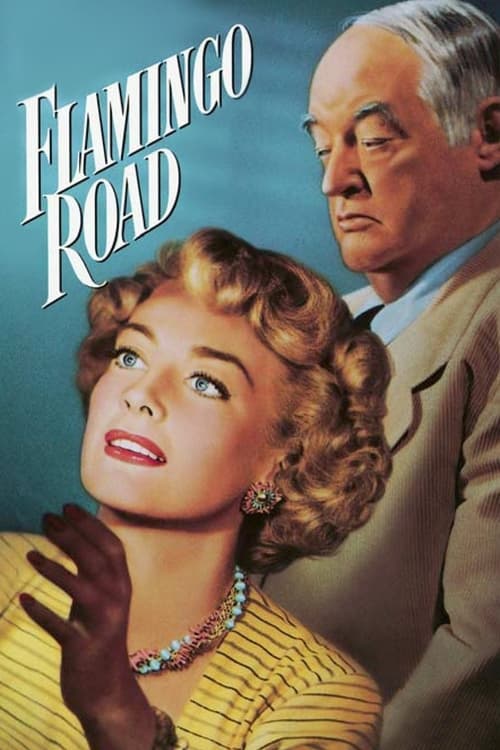
Flamingo Road
Plot
A stranded carnival dancer takes on a corrupt political boss when she marries into small-town society.
Get the Weekly Woke Watchlist
New and trending movies scored for woke bias, preachy messaging, and forced political themes — before you waste your evening.
No spam. One useful email per week.
Overall Series Review
Categorical Breakdown
The narrative is entirely focused on class conflict (carnival dancer vs. society elite/political machine), not race or immutable characteristics. Characters are judged by their ambition and moral content, whether good (Lane's drive) or evil (Sheriff Semple's corruption). The casting is colorblind for the time, which registers as genuinely colorblind by current standards, without any political lecturing on race or intersectional hierarchy.
The film criticizes corruption within a specific, fictional American Southern town's political system. The core message is that local politicians are cynical and corruptible, but this critique is directed at the abuse of power, not Western civilization as a whole. The protagonist's goal is to achieve success within American society (moving to 'Flamingo Road'), which affirms the potential for upward mobility rather than engaging in civilizational self-hatred.
The female lead, Lane Bellamy, is a powerful, highly ambitious 'woman against the world' who controls her own fate, which aligns with the 'Girl Boss' archetype. She uses marriage as a tactical move for prestige and revenge rather than solely for love or domestic fulfillment. The men around her are either corrupt (Sheriff Semple), morally weak and self-destructive (Deputy Carlisle), or passive (Dan Reynolds), suggesting a moderate degree of male emasculation and highlighting female dominance in the conflict.
As a 1949 film made under the Hollywood Production Code, the romantic relationships and social structure are exclusively normative, featuring heterosexual pairings and the conventional social ambition of marriage. The narrative contains no elements of alternative sexualities, gender ideology, or deconstruction of the nuclear family as a societal goal. Sexuality is a private matter tied to social status and marriage.
The film's focus is on the moral and political vacuum of corruption, not organized religion. Neither traditional religion nor Christianity is depicted as a root of evil, nor is faith a major source of strength for the characters. The conflict between the antagonist and protagonist is a classic battle of objective morality (corruption is wrong) versus evil, placing the movie firmly in the realm of transcendent morality, even if the world it depicts is cynical.
Get the Weekly Woke Watchlist
New and trending movies scored for woke bias, preachy messaging, and forced political themes — before you waste your evening.
No spam. One useful email per week.