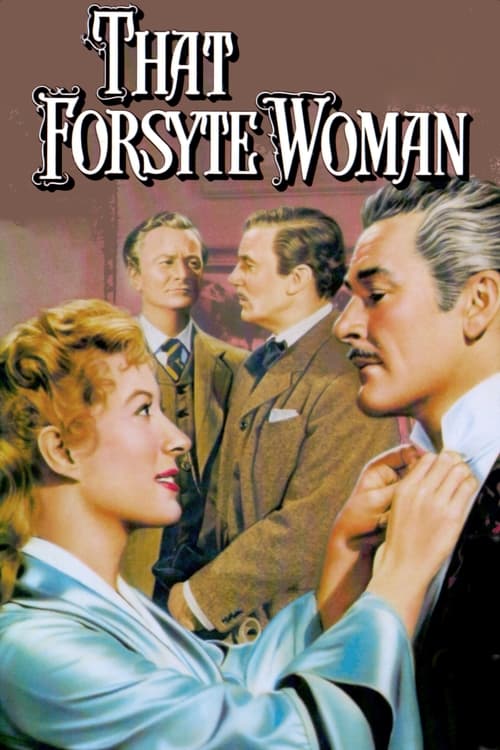
That Forsyte Woman
Plot
Soames and Irene Forsyte have a marriage of convenience. Young Jolyon Forsyte is a black sheep who ran away with the maid after his wife's death. Teenager June Forsyte has found love with an artist, Phillip Bosinny. The interactions between the Forsytes and the people and society around them is the truss for this love story set in the rigid and strict times of the Victorian age.
Get the Weekly Woke Watchlist
New and trending movies scored for woke bias, preachy messaging, and forced political themes — before you waste your evening.
No spam. One useful email per week.
Overall Series Review
Categorical Breakdown
The narrative is entirely focused on universal themes of love, possessiveness, and class difference within an ethnically and racially homogenous Victorian English setting. Character merit, particularly moral and spiritual merit, is the sole measure of value, not immutable characteristics. The central critique is against the upper-middle class based on their materialism and proprietary nature, not race or intersectional hierarchy.
The film acts as a strong indictment of the 'rigid and strict times' and the materialism inherent in the wealthy, Victorian English family structure. The central villains, the Forsyte family, are depicted as 'stuck-up' and 'snobbish,' demonstrating a deconstruction of that specific cultural heritage of 'property.' However, the critique elevates art and genuine emotion, which are also Western values, rather than valorizing non-Western 'Other cultures.'
The core of the plot centers on Irene, a sympathetic woman who is trapped and viewed as a 'piece of furniture' by her possessive husband, Soames. Soames, the wealthy male authority figure, is thoroughly vilified as 'controlling' and 'brutish.' The narrative strongly advocates for the female lead's emotional freedom and autonomy from a toxic, proprietary male relationship. Irene is not a career-focused 'Girl Boss,' and the movie's primary goal is to center her suffering and quest for emotional fulfillment.
The story adheres strictly to normative structures, focusing on a heterosexual love triangle involving marriage, engagement, and adultery. The nuclear family unit is the subject of drama, but there is no centering of alternative sexualities, no deconstruction of traditional male-female pairings, and no discussion of gender ideology. Sexuality is treated as a private matter that becomes public scandal, as befits a Victorian-era melodrama.
Religious content is largely absent. The conflict is defined by the tension between materialism (the Forsytes' 'man of property' complex) and the spiritual/emotional value of love and art. The moral compass of the film is a transcendent one, condemning human possessiveness and celebrating love, but this moral law is framed in secular-Romantic terms, not as an attack on or defense of any specific religion.
Get the Weekly Woke Watchlist
New and trending movies scored for woke bias, preachy messaging, and forced political themes — before you waste your evening.
No spam. One useful email per week.