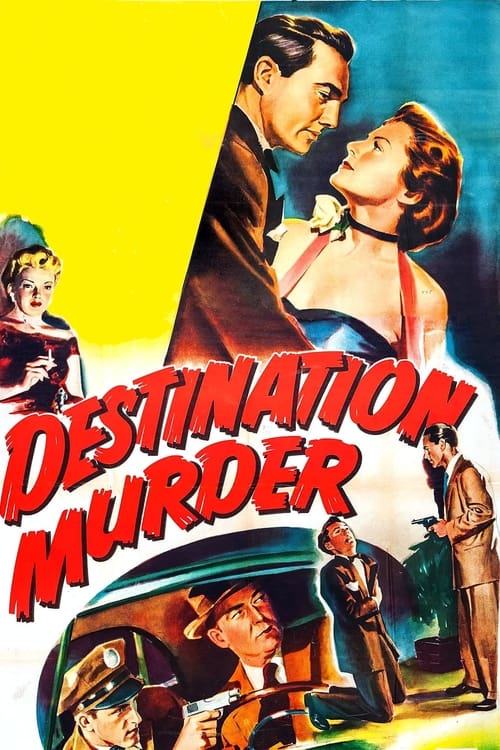
Destination Murder
Plot
Laura Mansfield catches a glimpse of mob hit man Jackie Wales after he shoots her businessman father. At the police station, Laura identifies Jackie as the murderer, but the policeman in charge of the case, Lt. Brewster, lets him go, citing a lack of corroborating evidence. Outraged, Laura worms her way into the unsuspecting Jackie's heart, trying to snare him and mob-connected club owner Armitage in her trap.
Get the Weekly Woke Watchlist
New and trending movies scored for woke bias, preachy messaging, and forced political themes — before you waste your evening.
No spam. One useful email per week.
Overall Series Review
Categorical Breakdown
Characters are universally judged by their actions and involvement in crime or the pursuit of justice, aligning with universal meritocracy. The narrative does not utilize race, immutable characteristics, or intersectional hierarchy as a basis for conflict or characterization. There is no forced diversity or vilification of 'whiteness.'
The central conflict is a private quest for revenge after a murder, not a systemic critique of Western civilization. A police lieutenant is portrayed as ineffectual in solving the crime, providing the motivation for the protagonist's action, but this depicts localized police incompetence, not civilizational self-hatred.
The protagonist, Laura Mansfield, is a highly resourceful and proactive 'seeker hero' who enters a dangerous environment to seek justice. This demonstrates a high degree of female agency beyond traditional domestic roles. However, her actions are ultimately manipulated by the male mastermind, Stretch Norton, which prevents her from being a perfect 'Girl Boss' and restores a degree of male competency in the villain role. No explicit anti-natalism is present.
The film adheres to the normative social structure of its 1950s production era. The romantic and relational dynamics are exclusively traditional male-female pairings. There is no presence of alternative sexualities, deconstruction of the nuclear family beyond the tragedy that begins the plot, or promotion of gender ideology.
The plot is a clear morality tale about the objective sin of murder and the pursuit of justice, even if it is extralegal vengeance. The film acknowledges a higher moral law by centering its conflict on a violent crime. No hostility toward religion, specific anti-Christian themes, or overt embrace of moral relativism is present.
Get the Weekly Woke Watchlist
New and trending movies scored for woke bias, preachy messaging, and forced political themes — before you waste your evening.
No spam. One useful email per week.