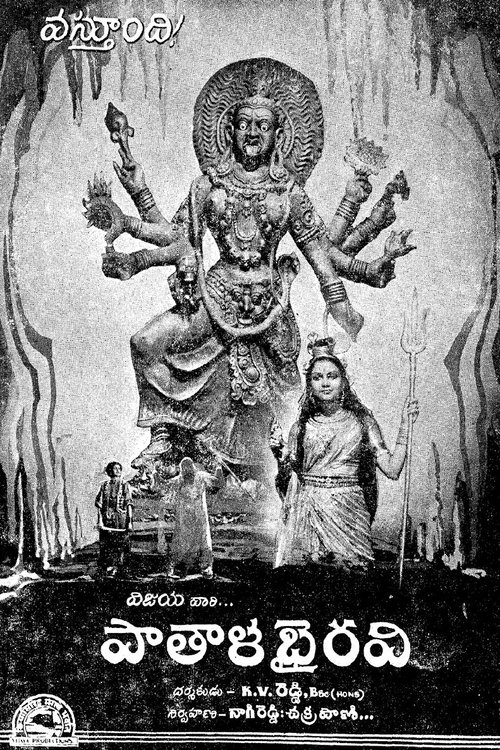
Pathala Bhairavi
Plot
Thota Ramudu faces opposition when he falls in love with a princess. He then seeks the help of a sorcerer, who secretly plans to sacrifice Thota Ramudu to Goddess Pathala Bhairavi.
Get the Weekly Woke Watchlist
New and trending movies scored for woke bias, preachy messaging, and forced political themes — before you waste your evening.
No spam. One useful email per week.
Overall Series Review
Categorical Breakdown
The hero, a gardener’s son, is judged by his 'bravery and courage' rather than his low social standing, confirming the principle of Universal Meritocracy. The primary conflict is a class barrier that is overcome by the content of the hero’s soul and his individual effort. The casting is culturally authentic to the film’s setting.
The film is a piece of domestic folklore that celebrates Hindu cultural and spiritual traditions, specifically setting up the hero's 'domestic' worship of Rama as the moral good. The villain is a sorcerer from an 'other' culture who engages in 'uncivilized' practices, framing the home culture and its moral laws as the protective force against chaos and darkness.
The core dynamic establishes a male protagonist as the 'dashing hero' who embodies 'heroism' and pursues an arduous quest to win his bride. The princess is depicted as the object of his love who epitomizes 'innocence and sensuality' and shows 'loyalty' even when the hero is penniless. The complementary roles of the protective male and the loyal female are celebrated without any 'Girl Boss' or anti-natalist messaging.
The entire romantic plot is built upon the quest of the male hero to marry the female princess. The film adheres to a completely normative structure with the traditional male-female pairing and the nuclear family as the desired outcome. The focus remains on adventure and traditional love, without centering on alternative sexualities or gender theory.
The conflict is not between secularism and religion, but between the hero’s ‘domestic’ and ‘frequent’ worship of Rama, which represents objective goodness, and the sorcerer's ‘uncivilised’ occult practices and human sacrifice. Faith and moral integrity are presented as a source of strength that contributes to the hero's ultimate victory.
Get the Weekly Woke Watchlist
New and trending movies scored for woke bias, preachy messaging, and forced political themes — before you waste your evening.
No spam. One useful email per week.