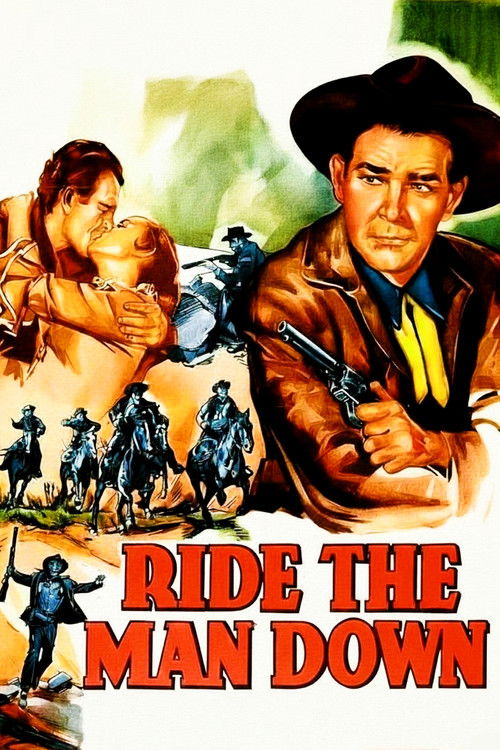
Ride the Man Down
Plot
After Celia's father dies, a war erupts over control of his land.
Get the Weekly Woke Watchlist
New and trending movies scored for woke bias, preachy messaging, and forced political themes — before you waste your evening.
No spam. One useful email per week.
Overall Series Review
Categorical Breakdown
The hero, Will Ballard, is mentioned in a subplot as being 'part Indian' and is hated by a villain for this reason. This is a form of prejudice shown by a villain and is framed as a negative trait of the antagonist, not a systemic indictment of the era or the West itself. The primary conflict is over wealth and land, making merit—or lack of it in the case of the greedy villains—the core driver of character judgment. No forced diversity or vilification of 'whiteness' as a group is present; the antagonists are white ranchers judged purely on their corruption and greed.
The entire plot revolves around the defense and preservation of a core Western institution: the family-owned Hatchet Ranch. The hero and heroine fight to protect their land and ancestor's legacy from 'vultures' who want to seize the property. This narrative frames the core Western values of enterprise and property ownership as something righteous to be defended against chaos and lawlessness, directly affirming the principles of 'Gratitude & Chesterton’s Fence.'
Celia Evarts, as the heiress, is a strong-willed, 'feisty' character who actively participates in protecting her ranch. She is the decision-maker for the property and is shown to be more capable and honorable than her male fiancé, Sam Danfelser, who is 'unmanned by her wealth and power and resents her strength.' She ultimately takes care of the final confrontation herself. While she is a capable woman in a position of power, her fight is to preserve her family's legacy, not an anti-natalist or 'Girl Boss' critique of traditional gender roles or motherhood.
The narrative contains a single romantic subplot focusing on the traditional male-female pairings of the hero with the heroine, as well as a secondary love interest for the hero and the heroine's treacherous fiancé. The structure is entirely normative. No alternative sexualities, deconstruction of the nuclear family, or gender ideology is present in the plot or character motivations.
The film is a secular Western focused on a land dispute, gunfights, and moral conflicts of loyalty and greed. Religion, Christianity, or any form of explicit faith is not a thematic element, a source of conflict, or a target of criticism. The moral framework is built on objective concepts of honor, betrayal, and justice.
Get the Weekly Woke Watchlist
New and trending movies scored for woke bias, preachy messaging, and forced political themes — before you waste your evening.
No spam. One useful email per week.