Street Corner
Plot
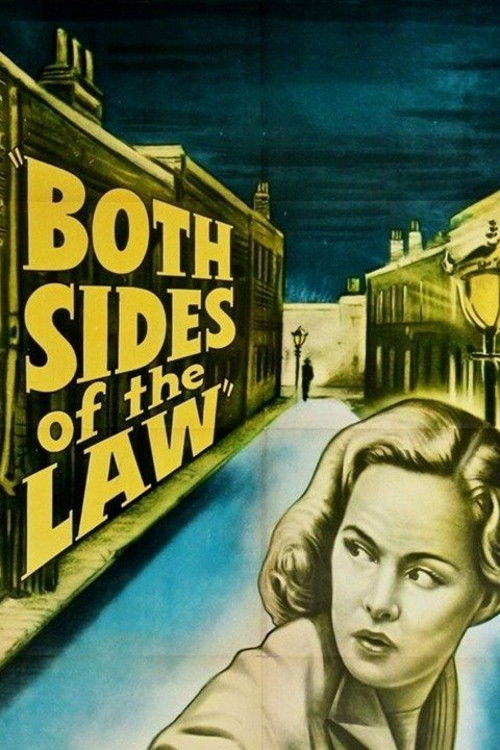
A pseudo-documentary focusing on the daily work and routine of women police officers built around three different storylines.
Get the Weekly Woke Watchlist
New and trending movies scored for woke bias, preachy messaging, and forced political themes — before you waste your evening.
No spam. One useful email per week.
Overall Series Review
Categorical Breakdown
The narrative makes no reference to racial identity, intersectional hierarchy, or the vilification of whiteness. Characters are judged solely by their actions and status as criminals or moral agents. Casting is entirely historically and culturally authentic to post-war London without any forced diversity.
The film focuses on the police, a core civic institution, as a force for order and moral correction in post-war London. The officers work to solve internal social problems, which demonstrates a belief in the ability of Western institutions to maintain order and liberty, not a hostility toward home culture or ancestors.
The movie centers women as competent, brave, and intelligent professionals in a demanding, non-traditional career, which is a significant pre-1960s celebration of female capability. However, the themes of the criminal cases revolve around failures in traditional family roles (motherhood, marriage, and temptation), and the film contains no anti-natalist or career-is-only-fulfillment messaging. The women are complementary to the male-led police force of the era, resulting in a low but not minimal score.
The plot is entirely focused on normative male-female pairing, with the central criminal cases involving bigamy, a marriage, and a young mother being tempted by a hoodlum. Sexuality is not centered as an identity, and there is no discussion or presence of gender ideology or the deconstruction of the nuclear family as oppressive.
The film operates within a framework of objective moral failure, with the police enforcing a higher moral and civil law to address issues like child abuse and theft. Religion itself is absent from the plot, but the entire procedural structure acknowledges an objective right and wrong, and there are no scenes that villainize religious figures or the Christian faith.
Get the Weekly Woke Watchlist
New and trending movies scored for woke bias, preachy messaging, and forced political themes — before you waste your evening.
No spam. One useful email per week.