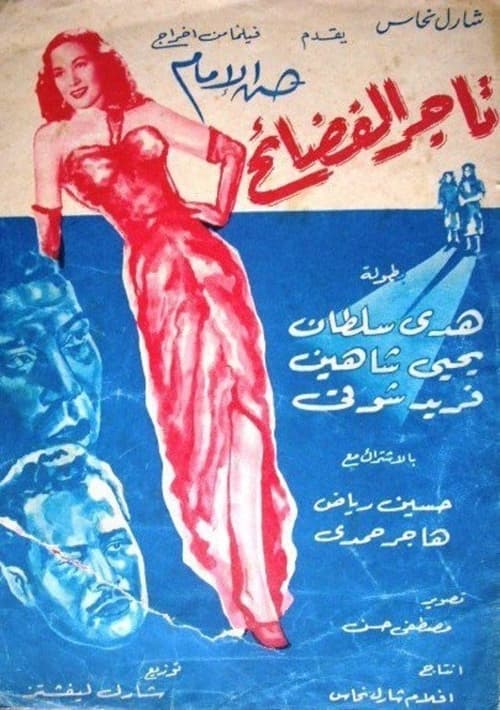
Scandal monger
Plot
Samia asks her fiancé Anis to help her sick mother. The police arrest them on charges of drug trafficking, but the court decides to acquit her. With the death of her mother, she goes to live with her wealthy aunt, and there, her cousin Ahmed takes a liking to her and marries her. Years pass and Anis is released from prison and seeks to get close to Samia again. He meets Ahmed and convinces him to participate in some projects to get closer to Samia. He blackmails her with pictures of the police reports, so she decides to get rid of him.
Get the Weekly Woke Watchlist
New and trending movies scored for woke bias, preachy messaging, and forced political themes — before you waste your evening.
No spam. One useful email per week.
Overall Series Review
Categorical Breakdown
The plot's conflict is entirely driven by personal choices, crime, and moral failings (drug trafficking, blackmail, betrayal, murder) within a specific community. Characters are defined by their relationships and actions, not by immutable characteristics, racial identity, or an intersectional hierarchy. The narrative contains no critique of 'whiteness' or forced diversity, as is typical for a non-Western film from this era.
The story does not display hostility toward its own civilization or ancestors. The dramatic conflict is a private and criminal one, focused on a love triangle and blackmail. The film critiques moral failure and illegal acts (drug trafficking, blackmail), which does not constitute an attack on core civilizational institutions or an elevation of external cultures as morally superior.
Samia is a central figure who demonstrates high agency by maneuvering through life-altering events, from being acquitted of drug charges to marrying a wealthy cousin. The highest expression of her agency is her decision to 'get rid of' her blackmailer, which is a powerful, albeit criminal, act of taking control of her fate. The film does not feature the modern 'Girl Boss' trope, nor does it contain anti-natalist or anti-family messaging, yet the female lead's decisive action elevates the score above a purely passive depiction.
The narrative's focus is exclusively on a traditional love triangle between a woman (Samia) and two men (Anis, her fiancé/blackmailer, and Ahmed, her husband). The plot maintains a normative structure centered on male-female pairing and marriage. There is no presence, centering, or lecturing on alternative sexualities, queer theory, or gender ideology.
The core of the story is a struggle with crime and personal morality, including blackmail and the ultimate decision to commit a serious offense. The conflict is grounded in legal and social consequences (arrest, prison, murder) that suggest a belief in objective right and wrong. No hostility toward religion (Christianity or otherwise) is present, and morality is clearly defined by the criminal acts themselves, not framed as subjective 'power dynamics'.
Get the Weekly Woke Watchlist
New and trending movies scored for woke bias, preachy messaging, and forced political themes — before you waste your evening.
No spam. One useful email per week.