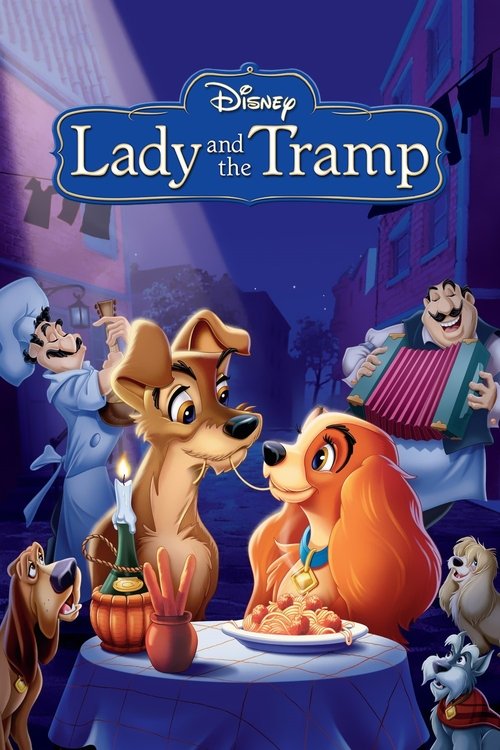
Lady and the Tramp
Plot
Lady, a golden cocker spaniel, meets up with a mongrel dog who calls himself the Tramp. He is obviously from the wrong side of town, but happenings at Lady's home make her decide to travel with him for a while.
Get the Weekly Woke Watchlist
New and trending movies scored for woke bias, preachy messaging, and forced political themes — before you waste your evening.
No spam. One useful email per week.
Overall Series Review
Categorical Breakdown
The film utilizes blatant ethnic and national stereotyping for several minor characters. The Siamese cats, Si and Am, are defined by an Orientalist caricature, serving as treacherous and sinister antagonists through their physical features and musical number. Other pound dogs are defined by exaggerated national or ethnic accents and personalities, showing a reliance on immutable characteristics for comedy and character shorthand.
The narrative explicitly validates and celebrates the institution of the family and the sanctity of the domestic home. The Tramp, initially the 'Noble Savage' archetype who rejects a collar and a home, willingly assimilates into Lady’s suburban life and ultimately defends the home and the new baby. The film's conclusion affirms that domestic life is preferable to a 'footloose' existence.
Lady’s character is defined by domesticity, gentleness, and a deep sense of responsibility toward the baby and the home. The story arc culminates in her entering a traditional pairing with the protective, heroic Tramp and becoming a mother. The owners, Jim Dear and Darling, exhibit conventional 1950s gender roles, with the wife remaining at home and the husband being the provider, supporting complementarian ideals.
The story strongly emphasizes the normative structure, focusing on the heterosexual pairing of Lady and the Tramp, which culminates in marriage (collars) and the creation of a nuclear family (puppies). There is no presence of alternative sexual ideologies, deconstruction of the family unit, or discussion of gender theory.
The story’s moral framework is based on transcendent virtues like loyalty, courage, and duty, such as Tramp's climactic fight to save the baby. There is no hostility toward religion or religious figures. Morality is objective and tied to protecting the innocent and upholding one’s responsibilities.
Get the Weekly Woke Watchlist
New and trending movies scored for woke bias, preachy messaging, and forced political themes — before you waste your evening.
No spam. One useful email per week.