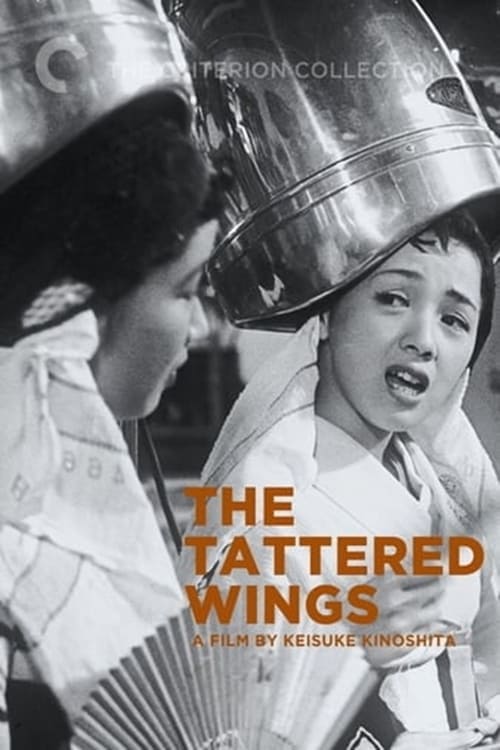
The Tattered Wings
Plot
A young widow, made world weary by her abusive, neglectful husband, finds herself in a minor scandal when she's seen with her intense, no-nonsense childhood sweetheart.
Get the Weekly Woke Watchlist
New and trending movies scored for woke bias, preachy messaging, and forced political themes — before you waste your evening.
No spam. One useful email per week.
Overall Series Review
Categorical Breakdown
The film is a Japanese production with a Japanese cast dealing with culturally specific issues of post-war Japan. The conflict is based on individual choice, social hierarchy, and duty, not race or intersectional identity politics. Characters are judged by their integrity and their place within the family and community structure, fitting the definition of Universal Meritocracy.
The film’s criticism is directed internally at the suffocating pressures of a conservative, gossipy, post-war Japanese small-town society and its traditions. It does not contain any hostility toward Western civilization, one's own home, or ancestors in the manner of civilizational self-hatred defined in the rubric. It explores a struggle between Japanese tradition and modernity.
The core of the plot centers on a woman's struggle against patriarchal social expectations that forced her into an abusive arranged marriage for her family’s financial benefit. Her desire to pursue her own happiness is presented in direct opposition to her prescribed duty as a widow and mother. The narrative champions the woman's self-determination and critiques the oppressive nature of a system that sacrifices her well-being, which aligns strongly with themes of individual fulfillment over traditional roles. The former husband is explicitly depicted as abusive and neglectful, casting a negative light on a traditional male figure.
The plot is entirely focused on heterosexual romantic relationships and the traditional institution of marriage, albeit complicated by the death of the first husband and a duty to the family. The film contains no evidence of centering alternative sexualities, deconstructing the nuclear family in an ideological sense, or promoting gender theory.
The movie’s moral conflict stems from social pressure, family duty, and gossip, which are secular/cultural mechanisms. It is not an attack on religion, nor is faith presented as a source of strength or a transcendent moral law. Since the film is set in Japan and the moral struggle is between duty and personal desire, not a critique of Christianity, the content is neutral in this category.
Get the Weekly Woke Watchlist
New and trending movies scored for woke bias, preachy messaging, and forced political themes — before you waste your evening.
No spam. One useful email per week.