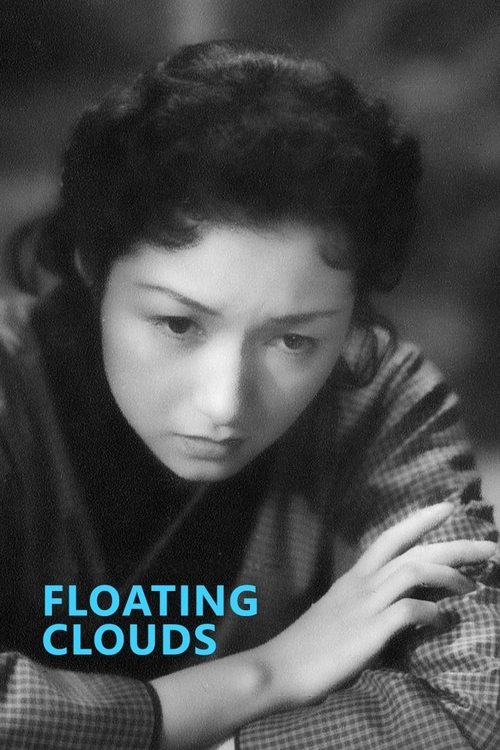
Floating Clouds
Plot
A married Japanese forester during WWII is sent to Indochina to manage forests. He meets a young Japanese typist and promises to leave his wife. He doesn't and after the war, she turns up and the affair resumes.
Get the Weekly Woke Watchlist
New and trending movies scored for woke bias, preachy messaging, and forced political themes — before you waste your evening.
No spam. One useful email per week.
Overall Series Review
Categorical Breakdown
The narrative centers entirely on the emotional and moral struggles of two Japanese characters in post-WWII Japan, not on racial or intersectional hierarchy. The focus is on universal human weakness and personal flaw under economic strain. Characters are judged by the content of their soul and the choices they make.
The movie provides a grim portrait of post-war Japan as a 'defeated nation' and a 'miserable place' suffering from economic and moral ruin. The criticism is an internal critique of the contemporary social state and male failings within Japanese society, not a broad demonization of national ancestors or Western civilization.
The core dynamic depicts the main male character as a weak, evasive, and toxic figure who repeatedly cheats on the protagonist with younger women. The female lead, Yukiko, suffers great indignity and endures an abortion, highlighting the systemic exploitation and ill-treatment of women by insensitive men. The story structure vilifies masculinity as selfish and irresponsible, but the female lead is not an instantly perfect 'Girl Boss'; her agency is consistently curtailed by her obsession and economic dependence.
The story adheres strictly to a traditional melodramatic structure concerning a heterosexual love triangle, marital infidelity, and a domestic affair. The narrative contains no elements of centering alternative sexualities, deconstructing the nuclear family on ideological grounds, or discussing gender theory.
The film adopts a relentlessly bleak and existential outlook on life, love, and morality, which suggests an underlying spiritual vacuum. The characters find themselves trapped in a hopeless cycle that acknowledges no higher moral law or source of transcendent strength, but the narrative does not contain any direct attacks or polemics against traditional religion, specifically Christianity.
Get the Weekly Woke Watchlist
New and trending movies scored for woke bias, preachy messaging, and forced political themes — before you waste your evening.
No spam. One useful email per week.