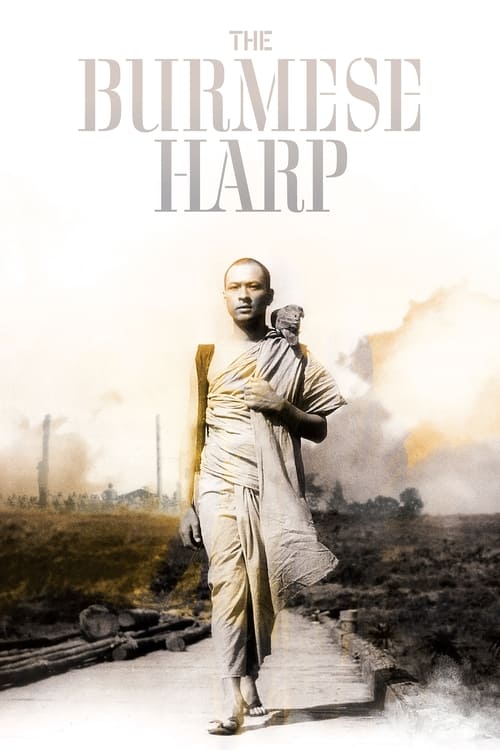
The Burmese Harp
Plot
In Burma during the closing days of WWII, a Japanese soldier separated from his unit disguises himself as a Buddhist monk to escape imprisonment as a POW.
Get the Weekly Woke Watchlist
New and trending movies scored for woke bias, preachy messaging, and forced political themes — before you waste your evening.
No spam. One useful email per week.
Overall Series Review
Categorical Breakdown
The film operates on a universal humanist plane where the core moral conflict is between the brutality of war and the protagonist’s spiritual compassion, not based on immutable characteristics. Characters are judged entirely by the content of their soul and moral action. The Burmese and British characters are depicted with humanity, and the protagonist's final act is a choice of transcendent spiritual duty over national identity, which is a critique of a militaristic ethos rather than a race-based vilification.
The film is an anti-militarist critique, specifically targeting the destructive folly and fanaticism of the Imperial Japanese war machine, not Japanese culture or the Japanese 'home' itself. The soldiers’ desire to return to Japan and the captain's loyalty to his men are treated sympathetically. The protagonist’s rejection of repatriation is a move toward a higher, spiritual value (Buddhist altruism) in response to the horror of unburied dead, not a celebration of external cultures being morally superior to the Japanese ancestors or home itself.
The core cast consists entirely of male soldiers, and the central plot is a male spiritual journey and an examination of male camaraderie in war. Women are largely absent from the narrative, appearing only in minor, supporting roles as background figures in the Burmese villages. There is no presence of the 'Girl Boss' trope, no thematic focus on emasculation, and no messaging concerning career fulfillment or anti-natalism.
The narrative contains no exploration of alternative sexualities, gender identity, or queer theory. The focus is exclusively on the bonds of male soldiers and one man's solitary spiritual vocation. The film maintains a completely normative structure with respect to sexuality and family dynamics by simply omitting the topic, offering no political or ideological commentary on the nuclear family.
Faith and spirituality are presented as the ultimate source of moral authority and healing from the trauma of war. The protagonist’s spiritual conversion to Buddhism is the central redemptive act of the entire film. He adopts the life of a monk to follow a moral law that demands reverence for the dead, explicitly affirming a transcendent morality and objective truth over the moral relativism of wartime nihilism.
Get the Weekly Woke Watchlist
New and trending movies scored for woke bias, preachy messaging, and forced political themes — before you waste your evening.
No spam. One useful email per week.