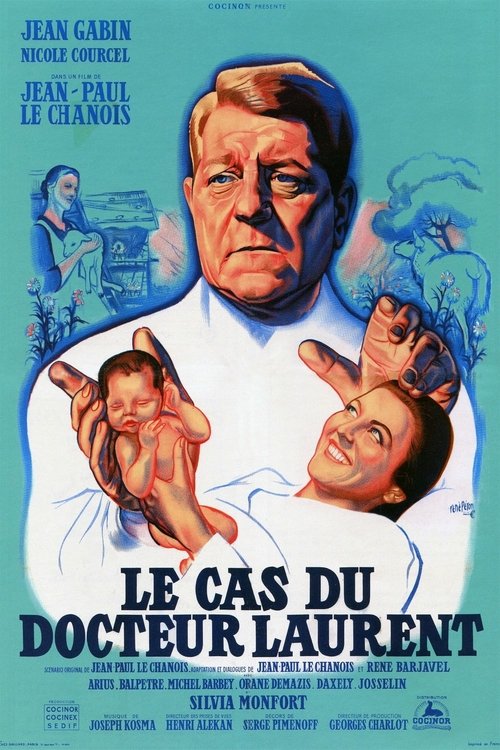
The Case of Dr. Laurent
Plot
A Paris-based doctor tries to spread the gospel of Natural Childbirth. Working in a cloistered rural community, Gabin runs up against the stone walls of fear and prejudice. His theories are proven sound when unwed mother Nicole Courcel gives birth within Gabin's methodology. The childbirth sequence is filmed straight-on with a delicate combination of taste and frankness. Nonetheless, the lurid ad campaign of Cas Du Dr. Laurent sensationalized this sequence all out of proportion.
Get the Weekly Woke Watchlist
New and trending movies scored for woke bias, preachy messaging, and forced political themes — before you waste your evening.
No spam. One useful email per week.
Overall Series Review
Categorical Breakdown
The film does not engage with race, intersectionality, or the vilification of whiteness. The conflict is purely between a competent, well-meaning doctor and a prejudiced, superstitious rural community. Character judgment is based entirely on one's willingness to accept medical innovation and merit, placing the narrative firmly in the universal meritocracy category.
The film criticizes the 'stone walls of fear and prejudice' and the 'superstitious' nature of a specific, cloistered French village. This is a critique of localized ignorance and a call for internal reform and acceptance of modern Western science (Parisian medicine), not hostility toward Western civilization itself. The message promotes scientific progress as a way to improve the home culture.
The movie challenges the traditional, fear-based subjugation of women during childbirth, and is noted for its 'modernity in its treatment of women' and their struggle for respect. This elevates the score slightly by showing a male hero fighting a traditionalist system for the benefit of women. However, the film is intensely pro-natalist, celebrating motherhood by removing its pain and terror. The male lead is a protective, heroic figure of competence, and the plot centers on the biological reality of complementary gender roles, resulting in a low-moderate score.
The narrative focus is exclusively on the traditional, biological function of female childbirth, centering the male-female pair (even if the mother is unwed) and the nuclear event of birth. There is no presence of sexual ideology, alternative sexualities, deconstruction of the nuclear family, or gender theory lecturing.
The film was controversial and condemned by some Catholic authorities in the US, likely because the emphasis on a pain-free, 'natural' birth via medical technique challenged traditional, religious-influenced views of labor as suffering. The narrative frames the resistance as 'prejudice and superstition,' which can be interpreted as hostile to unthinking tradition. However, it does not depict Christian characters as villains or preach moral relativism, and the hero's quest is for a higher physical and emotional truth, keeping the score low.
Get the Weekly Woke Watchlist
New and trending movies scored for woke bias, preachy messaging, and forced political themes — before you waste your evening.
No spam. One useful email per week.