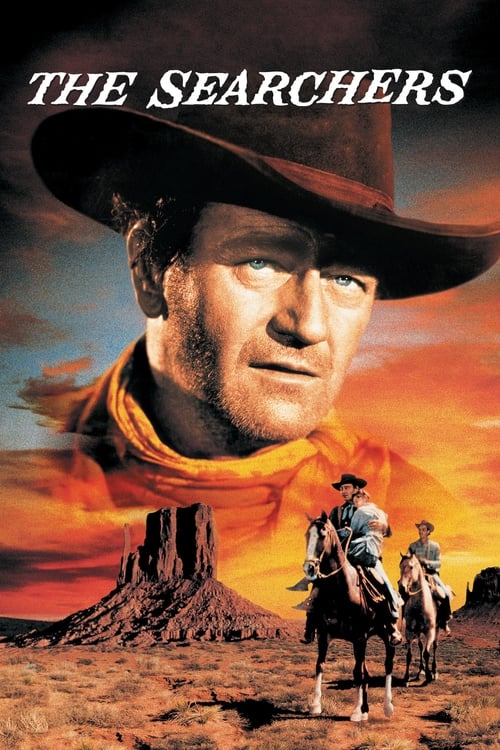
The Searchers
Plot
As a Civil War veteran spends years searching for a young niece captured by Indians, his motivation becomes increasingly questionable.
Get the Weekly Woke Watchlist
New and trending movies scored for woke bias, preachy messaging, and forced political themes — before you waste your evening.
No spam. One useful email per week.
Overall Series Review
Categorical Breakdown
The central conflict and the protagonist's motivation are entirely reliant on race, hatred, and the perceived 'immutable characteristic' of his niece being 'defiled' by adoption into a different tribe. However, the film portrays the protagonist's racial hatred as a destructive, personal evil, not an indictment of generalized whiteness, and avoids the modern intersectional lecture on systemic oppression.
The narrative places high value on the institutions of the family and the homestead, framing them as a moral civilization and necessary shield against the chaos and violence of the frontier. The sacrifices of ancestors and the struggle to establish a home are respected foundational elements of the story.
Gender dynamics are strictly complementarian and traditional. Female characters primarily occupy roles as wives, mothers, or potential brides. There are no 'Girl Boss' tropes, no emasculation of male characters, and motherhood and the maintenance of the family structure are clearly celebrated and vital to the narrative.
The structure is entirely normative. The narrative centers on traditional male-female pairings and the nuclear or extended family as the standard. There is no presence of alternative sexualities, deconstruction of the family, or commentary on gender ideology.
Traditional faith (Christianity) is an integral part of the community's structure and moral compass, with religious figures being respected community leaders. The film operates within a framework of objective moral law, viewing the protagonist's descent into hatred as an objectively evil act rather than embracing moral relativism.
Get the Weekly Woke Watchlist
New and trending movies scored for woke bias, preachy messaging, and forced political themes — before you waste your evening.
No spam. One useful email per week.