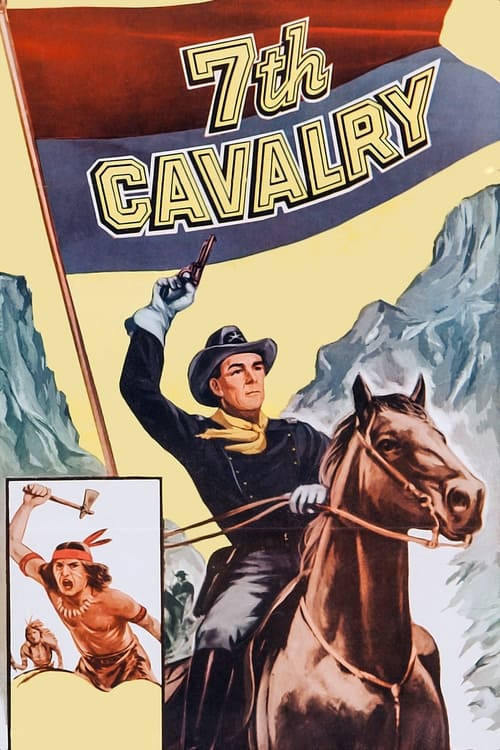
7th Cavalry
Plot
An officer accused of cowardice volunteers to bring back General Custers's body after Little Big Horn.
Get the Weekly Woke Watchlist
New and trending movies scored for woke bias, preachy messaging, and forced political themes — before you waste your evening.
No spam. One useful email per week.
Overall Series Review
Categorical Breakdown
The plot's central conflict revolves around an officer's personal honor and is resolved through his individual merit and courage, not on the basis of any immutable characteristic. The theme of meritocracy is universal in the protagonist's quest for redemption. The portrayal of the Native American opposition is conventional for its time, framing the conflict as a military struggle rather than a lecture on systemic oppression or white vilification.
The film is fundamentally a celebration of military and civilizational duty. The protagonist defends the legacy of the 7th Cavalry and General Custer, while fulfilling an order from the President to honor the dead. The narrative reinforces the institutions of the nation and the soldier's sacrifice, exhibiting gratitude for ancestors rather than self-hatred.
The women characters, such as the protagonist's fiancée and the embittered widow, serve traditional support or emotional catalyst roles. There are no 'Girl Boss' or 'Mary Sue' tropes present. The focus is entirely on the male protagonist's struggle with military honor and duty, with masculinity being depicted as protective and essential to the mission.
The narrative adheres strictly to normative structure, centering on the traditional courtship and heterosexual relationship between the lead officer and his fiancée. Sexual identity is not a plot point, and there is no presence of alternative sexualities or messaging deconstructing the nuclear family structure.
The film’s moral arc is built on objective morality (honor, duty, cowardice). However, a scene features a Christian-raised Sioux placing the spiritual power of his people's beliefs on the same intellectual plane as Christianity, which introduces a mild element of moral/spiritual relativism. Faith itself is not actively demonized, and the climax is resolved through a spiritual, non-secular event involving Custer's horse.
Get the Weekly Woke Watchlist
New and trending movies scored for woke bias, preachy messaging, and forced political themes — before you waste your evening.
No spam. One useful email per week.