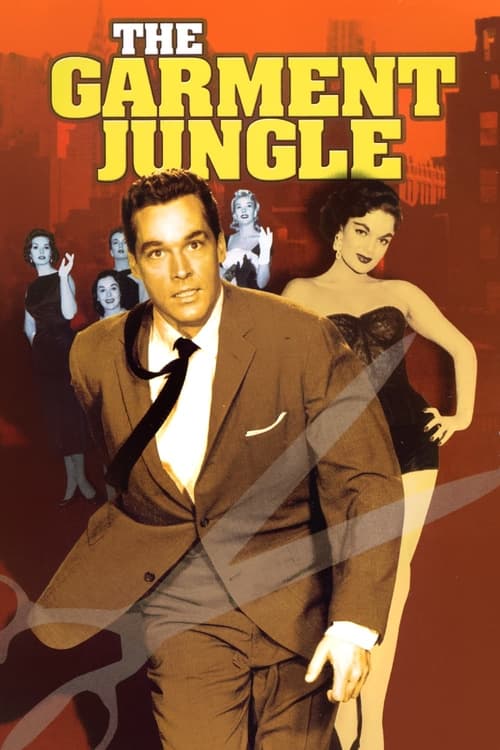
The Garment Jungle
Plot
Alan Mitchell returns to New York to work for his father Walter, the owner of a fashion house that designs and manufactures dresses. To stay non-union, Walter has hired Artie Ravidge, a hood who uses strong-arm tactics to keep the employees in line.
Get the Weekly Woke Watchlist
New and trending movies scored for woke bias, preachy messaging, and forced political themes — before you waste your evening.
No spam. One useful email per week.
Overall Series Review
Categorical Breakdown
The narrative's central conflict is a class-based one between corrupt capital/organized crime and labor, not a focus on race or intersectional hierarchy. The protagonist is a white, male, Korean War veteran who chooses the side of morality and justice over the corruption of his own family's business. The exploited workers are noted as including Hispanic and Italian-American people, which is an authentic reflection of the era's labor force, but this characteristic does not drive the plot to vilify whiteness or lecture on systemic oppression; the villainy stems from greed and criminality.
The film acts as a stinging critique of corruption and criminal elements within American industry, which serves as a plea for greater moral order and justice, not an attack on the foundational values of Western civilization. The returning protagonist is a Korean War veteran, and the resolution depends on ethical action and law enforcement. The core Western institution of justice is upheld as a shield against chaos.
Female characters hold complementary roles; Theresa Renata is the wife of the union organizer and a mother who bravely acts to secure evidence vital for the case, demonstrating strength within a traditional structure. Another key woman is a garment buyer, indicating a professional role, but neither character is a 'Girl Boss' trope, and the narrative does not contain anti-natalist themes. The focus is on the drama's main moral conflict.
As a 1957 film made under the Production Code, the movie operates entirely within a normative structure where traditional male-female pairing and the nuclear family are the standard. There is no presence of alternative sexual ideologies, deconstruction of the nuclear family, or lecturing on gender theory. The social milieu is strictly heterosexual.
The core of the plot is a straightforward moral battle between objective good (justice, fair wages, union rights) and evil (murder, racketeering, exploitation). The protagonist's journey is a moral one where he embraces objective truth and a higher moral law. There is no hostility directed toward religion, and morality is not framed as subjective power dynamics.
Get the Weekly Woke Watchlist
New and trending movies scored for woke bias, preachy messaging, and forced political themes — before you waste your evening.
No spam. One useful email per week.