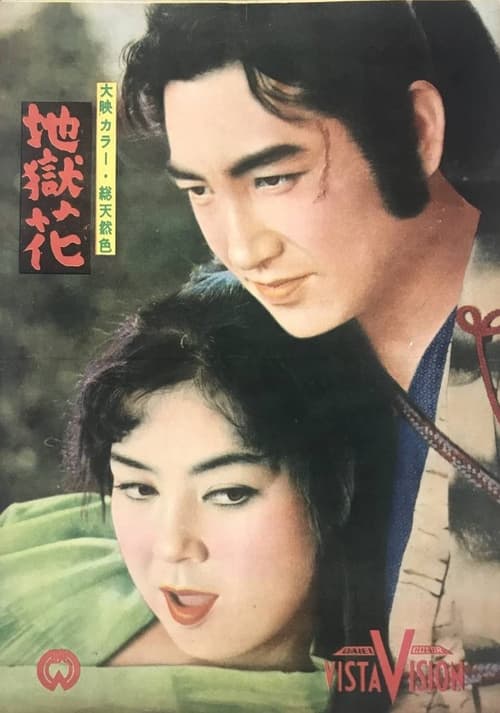
Jigoku bana
Plot
Period drama based on the novel by Saisei Murō.
Get the Weekly Woke Watchlist
New and trending movies scored for woke bias, preachy messaging, and forced political themes — before you waste your evening.
No spam. One useful email per week.
Overall Series Review
Categorical Breakdown
The movie is a Japanese period drama (jidai-geki) with an entirely Japanese cast, set in a pre-modern Japanese historical context. The narrative does not involve Western society, therefore there is no vilification of 'whiteness,' forced diversity, or 'race-swapping.' Character merit and the complexity of human emotion are the primary drivers of the conflict, which is based on individual action and bandit rivalries.
The film depicts a chaotic and tumultuous period of Japanese history—the late Heian era—by featuring bandits and violence. This is a dramatic exploration of human nature in a historical setting, not a statement that the 'home culture' is fundamentally corrupt from a modern, progressive point of view. The drama is localized to a conflict of 'human love and hatred,' not a systemic critique of Japanese civilization using an external moral lens.
The core of the plot focuses on the protagonist's profound 'awakening as a woman and as a mother.' This theme explicitly celebrates or centers on motherhood as a vital, transformative experience, directly opposing anti-natalist or 'career is the only fulfillment' messaging. While the lead is a 'wild beauty' and likely a strong character, her arc is defined by complementary female roles (motherhood) rather than a 'Girl Boss' trope that seeks to portray men as universally bumbling or toxic.
The story is a period drama focusing on 'human love and hatred' and 'vivid eroticism' within the context of heterosexual relationships (love, lust, and the central theme of motherhood). There is no centering of alternative sexualities, deconstruction of the nuclear family (the drama is about the creation of one, even in a non-traditional way), or presentation of gender ideology.
The conflict revolves around a great moral struggle, including a debate over the fate of an infant that is described as a conflict with 'humanity.' The themes of the source novelist, Murō Saisei, often deal with the bottom rung of society and moral consequence. This emphasis on objective moral struggle, inherent 'humanity,' and the period setting is consistent with a transcendent moral law, not moral relativism or specific anti-Christian animus.
Get the Weekly Woke Watchlist
New and trending movies scored for woke bias, preachy messaging, and forced political themes — before you waste your evening.
No spam. One useful email per week.