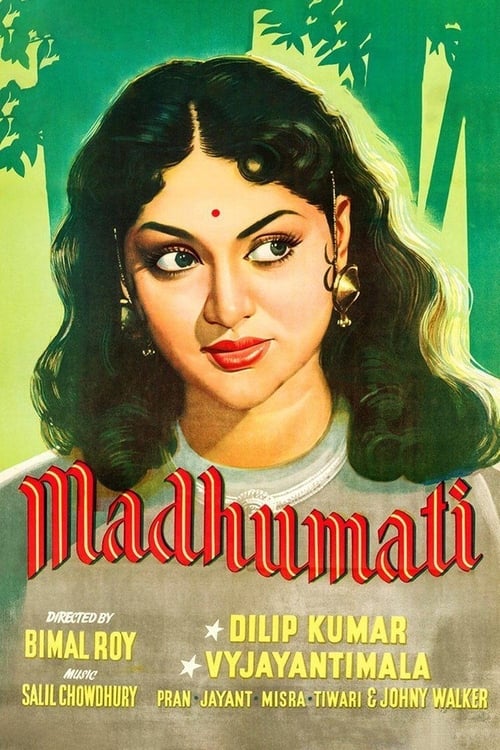
Madhumati
Plot
Two men take shelter in a derelict mansion situated in the countryside during a storm. One of the men suddenly becomes aware that he once visited this mansion in a past life; he recounts a story about when he was Anand, a painter, who fell in love with a tribal girl named Madhumati.
Get the Weekly Woke Watchlist
New and trending movies scored for woke bias, preachy messaging, and forced political themes — before you waste your evening.
No spam. One useful email per week.
Overall Series Review
Categorical Breakdown
The narrative features a conflict between the wealthy, exploitative landlord (Raja Ugranarain) and the local, dispossessed tribal community, whose daughter, Madhumati, is the tragic heroine. This structure clearly pits a powerful, privileged class against a marginalized indigenous group, aligning with an oppressor/oppressed lens based on class and tribal identity. However, the film is an Indian production dealing with internal social issues, not the vilification of 'whiteness' or forced Western diversity, thus remaining low on the scale.
The film does not exhibit hostility toward its own culture or ancestors; rather, it criticizes an internal, oppressive feudal system (the Zamindar) within the Indian context. The hero, Anand, an urban-educated Indian, actively sympathizes with the marginalized local people and their 'unspoiled folk tradition' against the exploitative capitalist elements. The story is a localized morality play that respects the land and its people.
The female lead, Madhumati, is a strong, independent 'queen of the jungle' who initiates the marriage proposal with the male lead. The dynamic is one of traditional, complementary partnership and devotion, as her tragedy is rooted in a desire to live for her love. There is no 'Girl Boss' trope, male emasculation, or anti-natal/anti-family messaging; the central conflict is purely a struggle for justice in a traditional, normative romance.
The core plot is a normative, heterosexual romance across two lives. The film's focus is exclusively on the traditional male-female pairing and the nuclear family unit (the hero in the frame story is traveling to meet his wife and child). There is no presence of alternative sexual ideology, deconstruction of the family, or gender theory lecturing in the narrative.
The film’s entire plot mechanism is based on the spiritual concept of **reincarnation** and an active pursuit of justice from beyond the grave. This fundamental reliance on an afterlife, objective spiritual truth, and cosmic moral law (karma/justice) is entirely antithetical to moral relativism and anti-theistic views. The villain is an immoral, feudal man, not a religious figure or institution.
Get the Weekly Woke Watchlist
New and trending movies scored for woke bias, preachy messaging, and forced political themes — before you waste your evening.
No spam. One useful email per week.