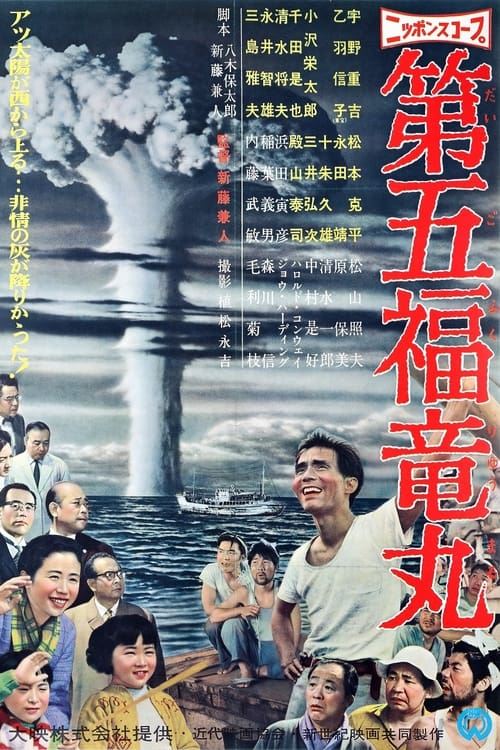
Lucky Dragon No. 5
Plot
An ageing fishing boat, Dai-go Fukuryu Maru ("Lucky Dragon No. 5") sets out from the port of Yaizu in Shizuoka Prefecture. It travels around the Pacific line fishing. While the ship is near Bikini Atoll, the ship's navigator sees a flash. All the crew come up to watch. They realize it is an atomic explosion, but take time to clear their fishing gear. A short time later, grey ash starts to fall on the ship. When the ship returns to port the sailors have been burned brown. They unload the fish, which are then transported away. They visit the local doctor and then go to Tokyo for an examination. It turns out they are all highly radioactive. Their symptoms become worse, and the contaminated fish causes a panic.
Get the Weekly Woke Watchlist
New and trending movies scored for woke bias, preachy messaging, and forced political themes — before you waste your evening.
No spam. One useful email per week.
Overall Series Review
Categorical Breakdown
Characters are judged by the content of their soul and shared human tragedy, directly drawn from a real-world event involving an all-Japanese crew. There is no forced insertion of diversity or vilification of 'whiteness' as a general category; the focus is on a geopolitical event where innocent fishermen were victims of a major power's military action.
The film, a Japanese production, criticizes the recklessness and hubris of the United States' nuclear testing. The critique is directed externally at a specific Western military system's actions, which caused direct harm to the Japanese people. The film is sympathetic to its own Japanese culture, community, and nation, showing no hostility toward its 'own home' or ancestors, which places the score low, despite the powerful anti-Western-military critique.
The core cast is the all-male fishing crew. Women are present in supporting roles as wives and mothers who mourn and endure the tragedy. The film reflects traditional gender roles; there are no 'Girl Boss' or 'Mary Sue' tropes, no emasculation of the male characters, and no anti-natalist or anti-family messaging.
The story is a direct dramatization of a post-war nuclear incident focusing on radiation sickness, public panic, and family loss. The film adheres to a normative structure, centering on the traditional male-female pairings and nuclear families of the fishermen. There is no presence of alternative sexualities or gender ideology.
The narrative operates from a position of objective moral truth: that nuclear weapons are evil and human life is sacred. The gravity of the human suffering and the call for nuclear abolition constitute a transcendent morality. The film does not contain hostility toward religion or promote moral relativism.
Get the Weekly Woke Watchlist
New and trending movies scored for woke bias, preachy messaging, and forced political themes — before you waste your evening.
No spam. One useful email per week.