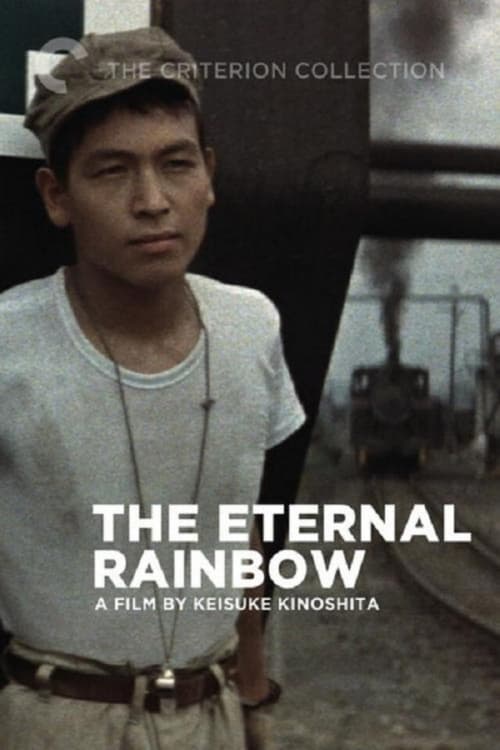
The Eternal Rainbow
Plot
Two men at an ironworks encounter roadblocks: the first does not have the grades to get a job, while the other finds himself falling for a co-worker.
Get the Weekly Woke Watchlist
New and trending movies scored for woke bias, preachy messaging, and forced political themes — before you waste your evening.
No spam. One useful email per week.
Overall Series Review
Categorical Breakdown
The narrative's central conflict revolves around class-based discrimination—factory workers versus office workers—which creates a hierarchy of privilege based on economic status, not immutable characteristics like race or gender. The rejection of a marriage proposal because the man is a lower-class laborer, not an engineer, directly opposes universal meritocracy. However, it does not involve the vilification of 'whiteness' or forced diversity, as the film is Japanese, placing the score low.
The film focuses its criticism on social inequality and worker alienation inherent in the industrial system, but it simultaneously presents the factory and the post-war Japanese economy as a symbol of hope and a vital cornerstone of the nation. It does not demonize Japanese ancestors or frame the home culture as fundamentally corrupt, but rather critiques a system within it, aligning with the 1/10 definition.
Gender dynamics are traditional; the woman, Chie, is pressured by her mother to 'marry up' by choosing a promising engineer over the kind, lower-class laborer. The female character's struggle is about navigating traditional family expectations and class-conscious marriage customs. There is no 'Girl Boss' trope, no emasculation of men, and no anti-natal/anti-family messaging; men's struggles are professional/class-based, and women's are domestic/marital.
The plot is a heterosexual melodrama focused on traditional marriage and family formation, complicated by socioeconomic class. The narrative contains no themes related to sexual ideology, gender identity, or the deconstruction of the nuclear family. The structure is normative.
The film's focus is on social-economic issues, labor, and domestic drama. Religion is not a central theme, and there is no overt hostility toward faith (traditional Japanese religions or otherwise). The core existential question for the character Suda is the meaning of labor, not the rejection of a moral or spiritual authority. The story implicitly acknowledges transcendent struggle through its search for hope ('The Eternal Rainbow') but lacks explicit religious content, warranting a very low score.
Get the Weekly Woke Watchlist
New and trending movies scored for woke bias, preachy messaging, and forced political themes — before you waste your evening.
No spam. One useful email per week.