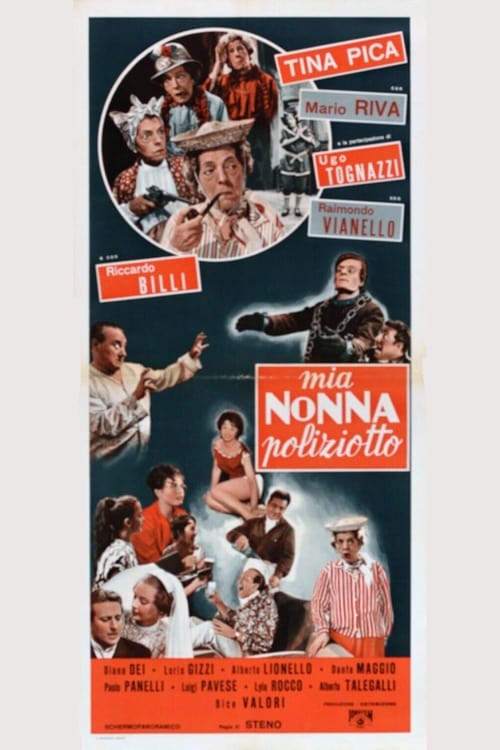
My Police Granny
Plot
Tina, an old lady, is in town for the wedding of her grandson when a medallion left to her by her late husband disappears. Dissatisfied with the police effort to find it, she sets on the tracks of the thieves herself.
Get the Weekly Woke Watchlist
New and trending movies scored for woke bias, preachy messaging, and forced political themes — before you waste your evening.
No spam. One useful email per week.
Overall Series Review
Categorical Breakdown
The narrative is entirely driven by the protagonist's personal connection to her family and a sentimental object, focusing on character-based merit (her determination) rather than immutable characteristics. There is no forced diversity, historical 'race-swapping,' or vilification of any demographic group. Characters are judged by their actions as thieves, police, or concerned citizens.
The central action is the grandmother fighting to retrieve a medallion, a symbol of her family and deceased husband, to secure her grandson’s wedding. This is a profound affirmation of home, family, and ancestor respect. There is no indication of hostility toward her civilization or its core institutions; she is merely correcting a failure in the local police system, which is a classic trope, not civilizational self-hatred.
Tina is an elderly woman defined by her roles as a grandmother and a widow; her mission is fundamentally pro-family and pro-ancestor. She exhibits 'Girl Boss' agency by doing what the police cannot, but her motivation is entirely rooted in the complementary value of protecting her family’s legacy. The men in the police force are depicted as incompetent, which is a mild emasculation trope, but this failure is necessary to justify the grandmother's heroic action. Motherhood and family are celebrated through the context of the grandson's wedding.
The core plot revolves around a traditional nuclear family structure: a grandmother, her late husband, and a grandson’s forthcoming wedding. There is no centering of alternative sexualities, deconstruction of the family unit, or presence of gender ideology. The structure is purely normative and pre-dates the era of queer theory as a mainstream media concern.
The plot focuses purely on a material crime (theft) and its investigation. There are no themes or characters that express hostility toward religion or traditional faith. As a 1958 Italian film, the underlying cultural framework is assumed to acknowledge a transcendent morality without making it the main subject of the plot.
Get the Weekly Woke Watchlist
New and trending movies scored for woke bias, preachy messaging, and forced political themes — before you waste your evening.
No spam. One useful email per week.