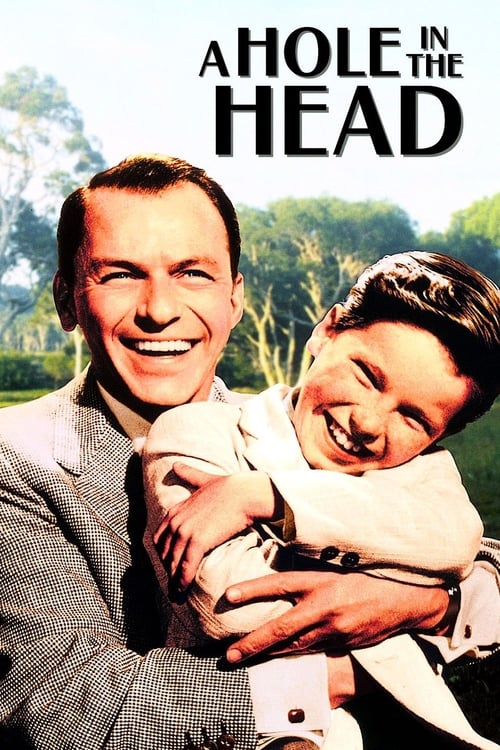
A Hole in the Head
Plot
An impractical widower tries to hang onto his Miami hotel and his 12-year-old son.
Get the Weekly Woke Watchlist
New and trending movies scored for woke bias, preachy messaging, and forced political themes — before you waste your evening.
No spam. One useful email per week.
Overall Series Review
Categorical Breakdown
Universal Meritocracy is the driving force. The plot is about a father's financial irresponsibility and his character's failure to meet his duties, not his race or 'privilege.' The conflict is between an impractical dreamer (Tony) and a pragmatic, successful businessman (Mario). Characters are judged solely on their merit as providers and caretakers. The only notable ethnic detail is the change from Jewish characters in the original play to Italian Americans in the film, a mid-century Hollywood shift that holds no modern intersectional meaning.
Gratitude and Chesterton's Fence prevail. The entire plot is about the protagonist fighting to save his small business and his family unit, both core Western institutions. The conflict is internal—a personal failure of responsibility—not an attack on the foundational culture or nation. The story celebrates the struggle for the American Dream, even in its flawed execution.
Complementarianism is the general structure. The story is a crisis of male responsibility, but it does not present masculinity itself as toxic. The man's brother, Mario, is a protective, highly responsible male role model. The women are not 'Girl Boss' tropes but represent different paths for the protagonist: Shirl is the 'free-spirited' option that reinforces his irresponsibility, while Eloise is the graceful widow who represents stability and the renewal of the nuclear family. Motherhood/family is the goal and is treated with respect. The score is 2 because the central male lead is consistently bumbling and irresponsible, though this serves a clear moral arc.
Normative Structure is strictly adhered to. The sexual dynamics are entirely within the traditional male-female pairing. The core struggle is to preserve the nuclear family—a father and son, and the potential addition of a new wife/mother. There is no deconstruction of the nuclear family, centering of alternative sexualities, or discussion of gender theory.
Transcendent Morality is the foundation. The film, a product of director Frank Capra, operates on a clear, objective moral framework where irresponsibility is bad and personal redemption, hard work, and caring for family are good. The film's themes are about 'high hopes' and moral integrity over cold pragmatism. There is no hostility toward religion or promotion of moral relativism, though the morality is mostly secular-humanist in presentation.
Get the Weekly Woke Watchlist
New and trending movies scored for woke bias, preachy messaging, and forced political themes — before you waste your evening.
No spam. One useful email per week.