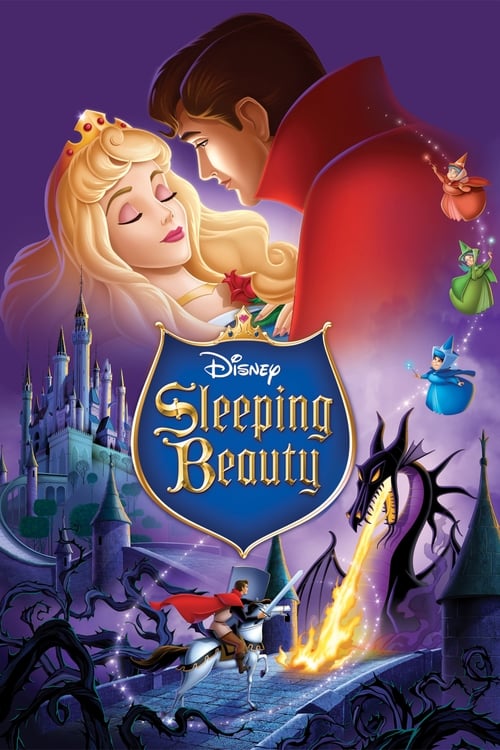
Sleeping Beauty
Plot
Cursed to die by the evil fairy Maleficent when she was a baby, Princess Aurora is sent into hiding under protection from three good fairies. As she grows up far away, Maleficent becomes increasingly determined to seal the princess's fate.
Get the Weekly Woke Watchlist
New and trending movies scored for woke bias, preachy messaging, and forced political themes — before you waste your evening.
No spam. One useful email per week.
Overall Series Review
Categorical Breakdown
Characters are judged solely by their virtue, courage, or malevolence. The plot focuses on a universal moral conflict between good and evil, not on identity groups. The casting reflects the historical European setting without any forced insertion of diversity or vilification of the majority group.
The film visually celebrates the architecture and cultural setting of a European kingdom, which is portrayed as beautiful and worth defending. Institutions like the monarchy, family, and the union of two kingdoms are shown as sources of stability and prosperity. Maleficent and her lair represent the destructive, anti-civilizational force.
The core plot mechanism requires a heroic male lead to rescue the passive female lead, who is asleep for most of the story. Prince Philip is a protective, active, and capable male figure who defeats the ultimate evil. The movie’s resolution is the celebration of marriage and the joining of two royal families. The good fairies, while active, ultimately serve as a supportive, motherly role who empower the prince to take action.
The entire narrative mechanism hinges on the concept of 'True Love's Kiss' between the betrothed male Prince and female Princess. The story explicitly centers the traditional male-female pairing and the nuclear family as the foundation of the kingdom's future. Sexual identity is not a factor, and there is no messaging that deconstructs the traditional family structure.
Maleficent is explicitly the 'mistress of all evil' who calls upon 'the powers of Hell,' and she is defeated when she transforms into a dragon, a clear symbol for Satan. Prince Philip is given a 'sword of truth' and a 'shield of virtue,' allegorical weapons referencing the Christian 'Armor of God.' The film posits a clear, objective moral law where good triumphs over evil through transcendent virtue.
Get the Weekly Woke Watchlist
New and trending movies scored for woke bias, preachy messaging, and forced political themes — before you waste your evening.
No spam. One useful email per week.