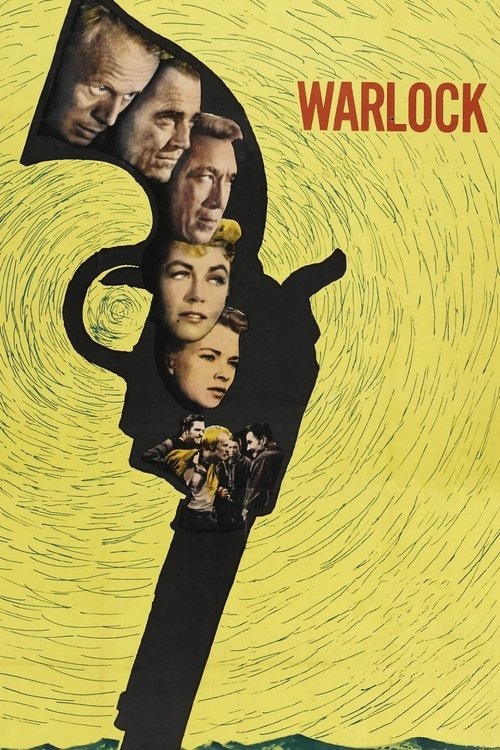
Warlock
Plot
A band of murderous cowboys has imposed a reign of terror on the town of Warlock. With the sheriff humiliatingly run out of town, the residents hire the services of Clay Blaisedell as de facto town marshal. He arrives along with his friend, Tom Morgan, and sets about restoring law and order on his own terms whilst also overseeing the establishment of a gambling house and saloon.
Get the Weekly Woke Watchlist
New and trending movies scored for woke bias, preachy messaging, and forced political themes — before you waste your evening.
No spam. One useful email per week.
Overall Series Review
Categorical Breakdown
The narrative is centered entirely on questions of law, violence, and individual moral responsibility, not on race or immutable characteristics other than a central character's physical disability. Characters are judged by their actions, their commitment to the law, or their violent competence. Casting is historically and culturally appropriate for the Western setting, with no evidence of race-swapping or lecturing on 'whiteness' or systemic oppression.
The movie subverts the simplistic heroic myth of the Western by questioning vigilantism and the cost of maintaining order through hired violence. An aged judge figure openly rants about the danger of any man setting himself above the law. This is a critique of a community's failure to establish proper institutions, arguing for the supremacy of formal law, which is a defense of institutional Western structures, not a call for their destruction or self-hatred.
The female characters are significant but exist primarily to complicate the central male relationships and moral conflicts. They are depicted as a 'righteous, church-going' mine heiress and an 'old flame' returning 'with a vengeance.' Neither is presented as a flawless 'Girl Boss' figure; their roles are traditional for the era, and the narrative focus remains on the men’s struggles for power and loyalty. The film does not contain anti-natalist or anti-family messaging.
The intense, possessive, and co-dependent relationship between the gunfighter Clay Blaisedell and his assistant Tom Morgan is widely recognized by critics as having strong, central homoerotic undertones, which was a remarkable thematic inclusion for a 1959 Western. Morgan's hostility toward any woman who threatens his relationship with Blaisedell further centers this non-normative relationship as a major dramatic element, thereby prioritizing an alternative sexuality framework over traditional normative structure, even if expressed through subtext.
Religion is not a source of conflict or a target of vilification. A key moral character, Jessie Marlow, is described as 'church-going,' and the town's observance of a hymn is shown as a communal act, even if one prompted by the gunfighter. The moral law in the movie is debated in secular terms (vigilantism vs. formal law), but faith is presented as a neutral or potentially positive source of strength for some characters.
Get the Weekly Woke Watchlist
New and trending movies scored for woke bias, preachy messaging, and forced political themes — before you waste your evening.
No spam. One useful email per week.