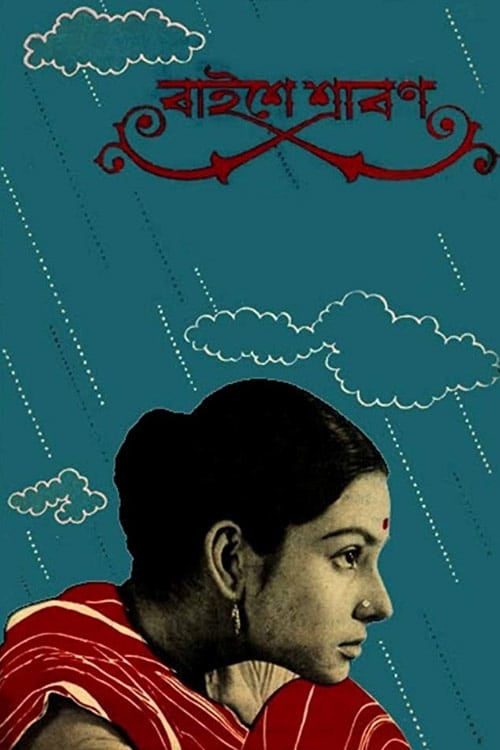
The Wedding Day
Plot
The tragic story set in the late 1930s, just before famine struck Bengal. It tells of the marriage of a dumpy middle-aged salesman of small goods to a beautiful teenager, and how, after initial days of happiness together, a series of misfortunes strike which slowly embitter the man.
Get the Weekly Woke Watchlist
New and trending movies scored for woke bias, preachy messaging, and forced political themes — before you waste your evening.
No spam. One useful email per week.
Overall Series Review
Categorical Breakdown
Characters are judged by their actions during the famine, such as the husband's ultimate selfishness, which causes the final tragedy. The entire cast is authentically Bengali, focusing the struggle on economic class and the erosion of universal human values, not race or intersectional hierarchy. The conflict is based on individual merit and moral choices under duress.
The film is a harsh social critique, but it is focused inwardly on the corruption and decay of values within the Bengali/Indian society and the local middle-class. The director looks for the ‘enemy within’ his own society rather than explicitly demonizing the 'Western civilization' or 'Western ancestors' responsible for the famine's systemic causes. This critique is internal, not civilizational self-hatred against the West.
The female character, Malati, is depicted as graceful and the victim of the man's uncouth nature and subsequent moral failure, culminating in her tragic suicide as a response to his selfishness. Her fate is a critique of the husband's failure to protect his family and his descent into animalistic survival instinct, not a promotion of the 'Girl Boss' or an anti-natalist message. The traditional family structure is shown to be tragically vulnerable, but not inherently oppressive.
The story centers exclusively on a normative, traditional male-female marriage and its collapse under economic pressure. No alternative sexualities, gender ideology, or deconstruction of the nuclear family are present in the narrative or its themes.
The central theme is the 'death of love, compassion and decay of values' and the 'erosion of human values' in the face of famine. This reflects a spiritual vacuum and moral breakdown driven by extreme materialist pressures. However, there is no direct hostility toward traditional religion, especially Christianity, as the setting is a Bengali village. The film's tragic arc implicitly affirms a higher moral law by depicting the horrific consequences of its violation.
Get the Weekly Woke Watchlist
New and trending movies scored for woke bias, preachy messaging, and forced political themes — before you waste your evening.
No spam. One useful email per week.