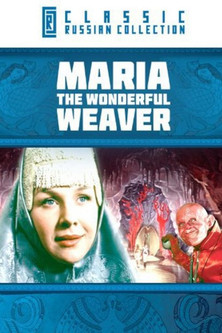
Maria, the Wonderful Weaver
Plot
An old soldier helps a young boy find his mother, who's been kidnapped to the magical underwater kingdom in a remote Russian lake.
Get the Weekly Woke Watchlist
New and trending movies scored for woke bias, preachy messaging, and forced political themes — before you waste your evening.
No spam. One useful email per week.
Overall Series Review
Categorical Breakdown
The story centers on archetypal characters (Soldier, Mother, Boy, Evil King) whose worth is determined entirely by their moral character and merit, such as the soldier's wit and kind heart, and Maria's skill as a weaver. The casting is homogeneous, reflecting the film's origin in Russian folklore, and does not feature any forced diversity or vilification of any group based on race.
The film is based on Russian fairy tales, actively celebrating the 'native place' and the virtues of the homeland. The hero is a respected returning soldier, an archetypal protector. The conflict is with a mythical evil king of an undersea kingdom, and there is no hostility or self-hatred directed toward the national culture or ancestors.
Maria is a mother whose capture is the entire catalyst for the adventure, underscoring the vital importance of the family unit and motherhood. Her title as 'Wonderful Weaver' also highlights a specific, valued skill. While she is a figure who must be rescued, the primary heroic role is taken by the male soldier and the boy, reflecting a traditional complementary dynamic where masculinity is protective.
The narrative's central theme is the rescue and restoration of the traditional nuclear family (mother and son). The film, as a 1959 Soviet children's production based on folklore, operates entirely within a normative structure, contains no representation or lecturing on alternative sexualities, and does not deconstruct gender or the family unit.
The conflict between the good-hearted Soldier and the villainous Water Spirit King operates on a clear, objective moral law. The transcendent virtues of kindness, wit, and goodness ultimately defeat evil and tyranny. The film avoids moral relativism, affirming a traditional 'good over evil' framework based on universal truths rather than criticizing religion.
Get the Weekly Woke Watchlist
New and trending movies scored for woke bias, preachy messaging, and forced political themes — before you waste your evening.
No spam. One useful email per week.