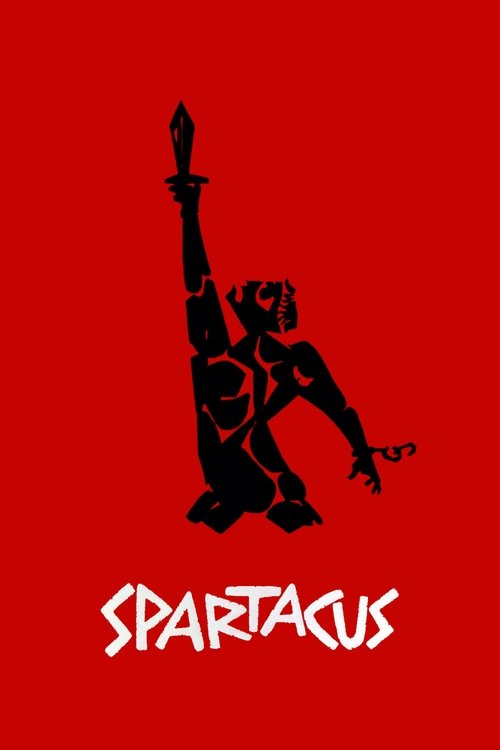
Spartacus
Plot
The rebellious Thracian Spartacus, born and raised a slave, is sold to Gladiator trainer Batiatus. After weeks of being trained to kill for the arena, Spartacus turns on his owners and leads the other slaves in rebellion. As the rebels move from town to town, their numbers swell as escaped slaves join their ranks. Under the leadership of Spartacus, they make their way to southern Italy, where they will cross the sea and return to their homes.
Get the Weekly Woke Watchlist
New and trending movies scored for woke bias, preachy messaging, and forced political themes — before you waste your evening.
No spam. One useful email per week.
Overall Series Review
Categorical Breakdown
The plot's central mechanism is the struggle of a diverse, oppressed underclass (the slaves) against a vicious, privileged elite (the Romans). The entire Roman power structure, which is a white male power base, is depicted as fundamentally evil, incompetent, or self-serving. The narrative is an extended lecture on systemic oppression and the privilege of the ruling class. Character merit is defined entirely by one's position against slavery, not by social standing.
The protagonist explicitly rejects Roman civilization, stating he prefers being a free man with his slave brothers over being the richest citizen in Rome, surrounded by slaves. The Roman elite are shown to be morally bankrupt, living in opulence sustained by human bondage. The 'home culture' (Roman Republic) is consistently framed as fundamentally corrupt, contrasting starkly with the spiritual and moral superiority of the 'barbarian' slaves.
The main female character, Varinia, begins as a concubine, then becomes the devoted companion and eventual wife of the protagonist. She is not a 'Girl Boss' and does not take a combat or leadership role. Masculinity is protective, and the film’s conclusion focuses on Varinia securing the future of her male child, positioning motherhood and the traditional nuclear family unit as a celebratory resolution.
The main villain, Crassus, is implicated in alternative sexuality through a famous scene discussing 'oysters and snails.' This is not a centering of alternative sexuality, but rather a way to characterize the antagonist's decadence and moral corruption, contrasting his luxury and unnatural appetites with the pure, heterosexual devotion of the hero and his wife. The focus remains on the normative male-female pairing.
The film’s central moral conflict is political (slavery versus freedom) rather than religious. The narrative consistently champions universal moral concepts like 'dignity,' 'justice,' and 'freedom,' suggesting the existence of a transcendent moral law. There is no hostility toward religion and, due to the setting, no specific vilification of Christianity.
Get the Weekly Woke Watchlist
New and trending movies scored for woke bias, preachy messaging, and forced political themes — before you waste your evening.
No spam. One useful email per week.