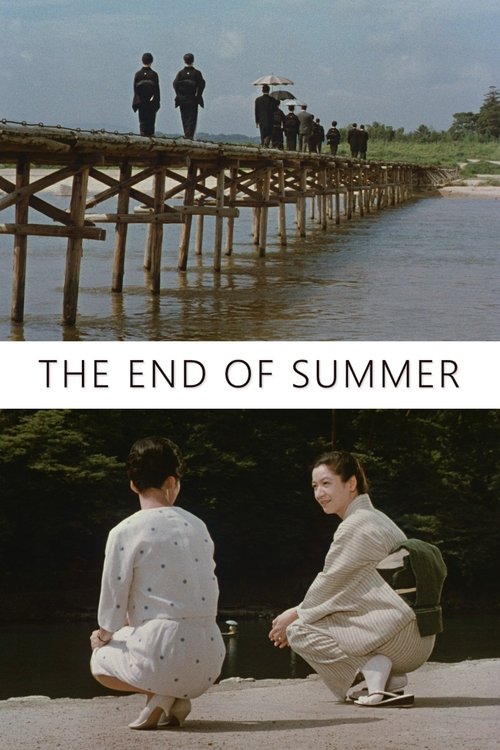
The End of Summer
Plot
The family of an older man who runs a small sake brewery become concerned with his finances and his health after they discover him visiting an old mistress from his youth.
Get the Weekly Woke Watchlist
New and trending movies scored for woke bias, preachy messaging, and forced political themes — before you waste your evening.
No spam. One useful email per week.
Overall Series Review
Categorical Breakdown
The film operates within a universal meritocracy framework, as the drama is based on the characters' personal morality, actions, and desires, not on immutable characteristics or political identity. The Japanese cast is historically and culturally authentic to the setting. There is no lecturing on privilege or forced insertion of diversity, as the narrative is entirely contained within the context of a Japanese family’s internal dynamics.
Institutions like the family and the traditional business are treated with respect as shields against chaos, even as they are shown to be dissolving due to modern pressures. The film’s tone is one of profound acceptance for the transience of life and the end of an era, not a fundamental condemnation of Japanese culture. The culture is a source of conflict for the characters navigating modernity, but the heritage is observed with a quiet reverence and melancholy.
The female characters are at the center of the conflict as they push back against arranged marriages offered for the family’s economic sake, asserting their right to marry for love or choose a life path of their own design. Their emancipation from strict family obligation is a key theme and is portrayed positively. The male patriarch is a flawed, irresponsible figure who is called an “old rake” for his secret affair, which slightly diminishes the protective role of the father, but the critique is aimed at his personal behavior, not masculinity in general.
The core of the film’s romantic and familial conflict rests entirely on traditional male-female pairing, discussing topics like marriage, widowhood, and infidelity. The nuclear family and its future remain the essential structural element of the narrative, even when it is threatened by change. There is no presence of sexual ideology or gender theory. Sexuality remains a private matter and is not centered as a political identity.
The film is guided by a transcendent morality, rooted in Zen Buddhist philosophy, which acknowledges a higher moral law in the form of the natural cycle of life and death. The narrative provides a serene and poignant conclusion that finds peace in the finality of life. There is no hostility toward religion or spirituality, and faith is presented as a quiet source of strength and acceptance.
Get the Weekly Woke Watchlist
New and trending movies scored for woke bias, preachy messaging, and forced political themes — before you waste your evening.
No spam. One useful email per week.