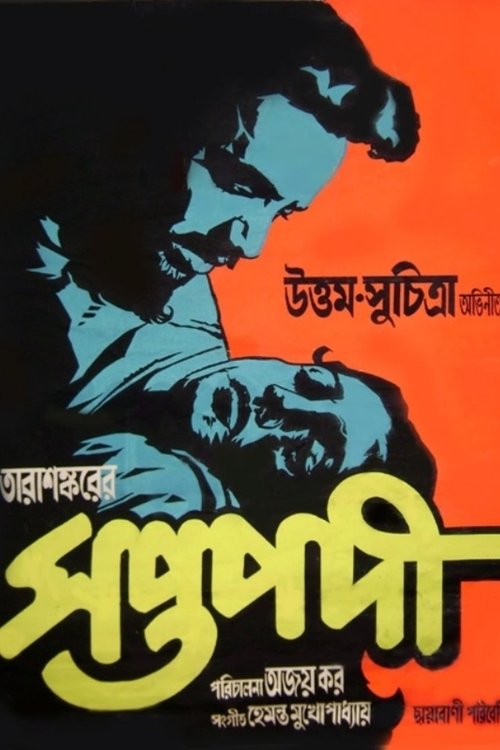
Saptapadi
Plot
During WWII an army doctor is brought a drunken Anglo-Indian woman, whom he'd once loved, for treatment.
Get the Weekly Woke Watchlist
New and trending movies scored for woke bias, preachy messaging, and forced political themes — before you waste your evening.
No spam. One useful email per week.
Overall Series Review
Categorical Breakdown
The plot's central mechanism is the conflict between distinct cultural and religious identities: Bengali Hindu versus Anglo-Indian Christian. The Anglo-Indian woman is marked as an 'other' by society, making her identity an explicit barrier to marriage. The main characters, however, transcend these boundaries based on shared merit as talented students and deep personal love. The narrative's message focuses on the tragedy of bigotry and the 'hollowness' of division, rather than a modern intersectional hierarchy or a systemic privilege lecture.
The narrative's primary antagonist is the 'staunch, conservative Hindu' father, whose 'rigid stance' represents the 'age-old traditions' of the local civilization. The story frames these traditions and their resistance to change as the source of chaos and disastrous consequences for the main couple. This presents a high-level critique of the local, non-Western, cultural 'home' institutions, though the direct definition of 'Western' civilizational self-hatred is not met.
The female protagonist, Rina Brown, is intelligent, resilient, and 'equally talented' to the male lead. The story avoids portraying men as bumbling idiots. The tragic dimension of Rina's life—her descent into alcoholism and despair—is presented as a consequence of societal and religious barriers to love, not as a celebration of career over motherhood or a simplistic 'Girl Boss' trope. The gender dynamic is complementary and based on mutual respect and capability.
The narrative centers entirely on a traditional heterosexual pairing. The conflict revolves around the religious and cultural differences preventing a conventional male-female marriage. The structure of the family is accepted as normative, and there is no inclusion or discussion of alternative sexualities or gender theory.
Religious belief is shown as the primary destructive force that overrules love and causes disaster and despair for the central characters. The hero's father's conservative Hinduism is explicitly the antagonist of the love story. The heroine, Rina, in a climactic scene, avows that 'God is dead as man has killed him,' indicating an explicit embrace of an anti-theistic or nihilistic conclusion regarding the divine in the face of human suffering caused by dogma.
Get the Weekly Woke Watchlist
New and trending movies scored for woke bias, preachy messaging, and forced political themes — before you waste your evening.
No spam. One useful email per week.