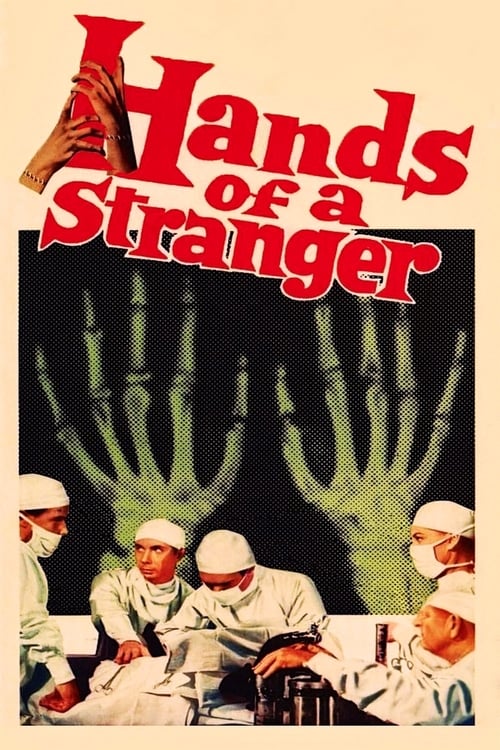
Hands of a Stranger
Plot
A concert pianist loses his hands in a car crash, but a surgeon gives him new ones. The experimental medical procedure goes awry when the new hands drive the pianist mad.
Get the Weekly Woke Watchlist
New and trending movies scored for woke bias, preachy messaging, and forced political themes — before you waste your evening.
No spam. One useful email per week.
Overall Series Review
Categorical Breakdown
The casting appears historically colorblind for a 1962 production, and the plot makes no reference to race, class, or intersectional identity. The central conflict is a universal, existential struggle over an artist's identity and his hands, judged purely on the character's internal merit and psychological state. The narrative is focused on individual moral and psychological horror.
The core critique is of the individual surgeon's 'overinflated ego' and medical hubris in performing an experimental procedure, which is a classic horror trope regarding scientific overreach. The narrative does not frame Western civilization, its institutions, or its ancestors as fundamentally corrupt, racist, or morally inferior. The conflict remains an internal struggle within the medical and artistic worlds.
Female characters are poorly utilized, largely serving as emotional foils to the male leads. The pianist's sister is a 'screaming' figure of melodrama, and other women are described as 'groupies' who admire the pianist's dramatic success. This results in weak, traditional gender roles rather than a celebration of complementarianism. However, it does not contain any 'Girl Boss' tropes, male emasculation, or anti-natalist messaging, making it an absence of modern woke feminism.
The narrative centers on traditional male-female pairing, such as the romance between the doctor and the pianist's sister, and the pianist's relationship with his mistress. Sexuality is a private aspect of the characters' lives, and there is no presence of alternative sexualities, deconstruction of the nuclear family, or lecturing on gender theory. The structure is entirely normative.
The doctor's dialogue presents a strong emphasis on rationalism, urging the patient not to let fear drive him into a 'pit of superstition.' This sets up a classic conflict between science and a faith-based worldview, slightly favoring the rationalist position. However, it is not an outright vilification of traditional religion, nor does it portray Christian characters as villains or bigots. The moral law is implicitly objective, as the new hands drive the pianist toward recognizably evil acts of violence.
Get the Weekly Woke Watchlist
New and trending movies scored for woke bias, preachy messaging, and forced political themes — before you waste your evening.
No spam. One useful email per week.