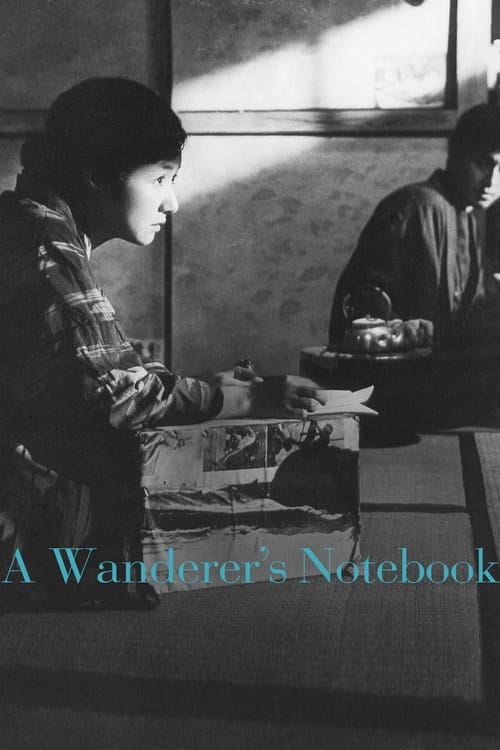
A Wanderer's Notebook
Plot
Considered one of the finest late Naruses and a model of film biography, A Wanderer’s Notebook features remarkable performances by Hideko Takamine – Phillip Lopate calls it “probably her greatest performance” – and Kinuyo Tanaka as mother and daughter living from hand to mouth in Twenties Tokyo. Based on the life and career of Fumiko Hayashi, the novelist whose work Naruse adapted to the screen several times, A Wanderer’s Notebook traces her bitter struggle for literary recognition in the first half of the twentieth century – her affairs with feckless men, the jobs she took to survive (peddler, waitress, bar maid), and her arduous, often humiliating attempts to get published in a male-dominated culture.
Get the Weekly Woke Watchlist
New and trending movies scored for woke bias, preachy messaging, and forced political themes — before you waste your evening.
No spam. One useful email per week.
Overall Series Review
Categorical Breakdown
The movie centers on a woman's struggle against economic poverty and social obstacles, which highlights class disparity and sexism in 1920s Japan. The focus is on a specific national and historical context. The main character's eventual success is achieved through her own merit as a writer. There is no forced insertion of diversity, vilification of "whiteness," or reliance on modern Western intersectional hierarchy, as the setting is authentically Japanese.
The film offers an unvarnished, often bleak, look at poverty and the harsh realities of Japanese urban life in the 1920s. This depicts the negative aspects of the home culture like sexism and economic struggle. It is not, however, a wholesale demonization of Japanese ancestors or civilization; the work is a respectful biography and celebration of a significant Japanese literary figure.
The core of the plot is the heroine's struggle for recognition in a male-dominated culture, and the men in her life are consistently portrayed as untrustworthy, feckless, selfish, or outright abusive. The narrative reinforces the idea that men are a primary source of the protagonist’s suffering and hardship. The heroine’s ultimate triumph is a career success that leads to solitude and professional fulfillment, placing career and art above traditional family structure.
The narrative focuses on heterosexual relationships, although they are mostly toxic and non-traditional due to the characters' transient lifestyles. There is no presence of sexual ideology, no centering of alternative sexualities, and no deconstruction of the nuclear family as an oppressive concept; the unstable family structures are consequences of poverty and personal failings.
The film is purely a secular drama about economic and social struggle. The plot concerns money, relationships, and literary ambition, which places the morality entirely within the realm of human choices and pragmatic reality. Traditional religion is neither a source of strength nor is it vilified as the root of evil.
Get the Weekly Woke Watchlist
New and trending movies scored for woke bias, preachy messaging, and forced political themes — before you waste your evening.
No spam. One useful email per week.