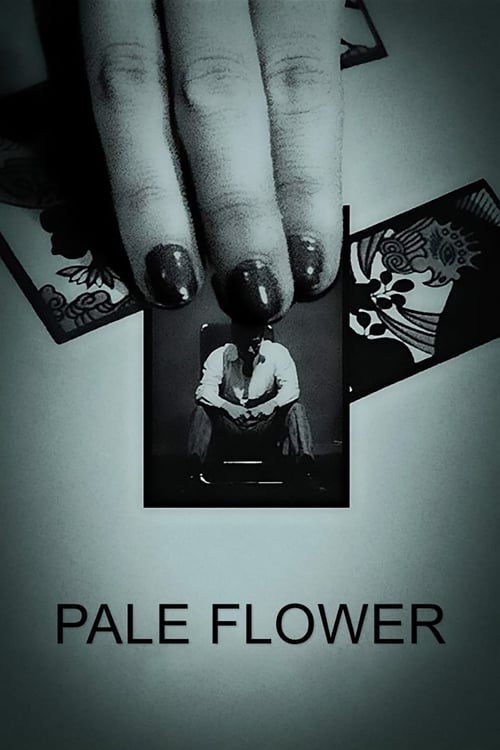
Pale Flower
Plot
A gangster gets released from prison and has to cope with the recent shifts of power between the gangs, while taking care of a thrill-seeking young woman, who got in bad company while gambling.
Get the Weekly Woke Watchlist
New and trending movies scored for woke bias, preachy messaging, and forced political themes — before you waste your evening.
No spam. One useful email per week.
Overall Series Review
Categorical Breakdown
The film focuses exclusively on Japanese characters within the Japanese underworld, making the narrative entirely culturally and historically authentic. Character dynamics are driven by universal existential angst, yakuza loyalty codes, and personal nihilism, not race or immutable characteristics. No elements of forced diversity or vilification of 'whiteness' are present.
The movie does not demonize its ancestors or the foundations of its civilization. The narrative presents a disillusionment with the 'lifeless' faces of modern society and the hollowing out of subjectivity caused by post-war capitalism. This is a critique of a specific modern cultural shift in Japan, contrasting it with the perceived, albeit criminal, codes of the yakuza, rather than a broad hatred of the home culture.
The primary female lead, Saeko, is highly non-traditional and operates independently in a male-dominated gambling world. Her drive is not portrayed as 'Girl Boss' empowerment but as a compulsion for self-destruction rooted in a spiritual emptiness. Muraki, the male lead, is competent and emotionally cold, not a bumbling idiot. He advises his other lover to seek a traditional life and family, providing a counterpoint to the nihilistic female lead.
The core relationship is a sexually charged but non-consummated bond between a man and a woman. The film does not center alternative sexualities, nor does it contain any lecturing on gender theory or the deconstruction of the nuclear family. The focus remains strictly on the dangerous, fatalistic pairing of the male and female leads.
The film's entire philosophical backbone is rooted in nihilism and an existential vacuum. The main characters declare that 'It's all so pointless' and seek meaning only in the adrenaline of high-stakes gambling and violence. This atmosphere strongly suggests that morality is entirely subjective and life lacks any objective, transcendent meaning or spiritual authority.
Get the Weekly Woke Watchlist
New and trending movies scored for woke bias, preachy messaging, and forced political themes — before you waste your evening.
No spam. One useful email per week.