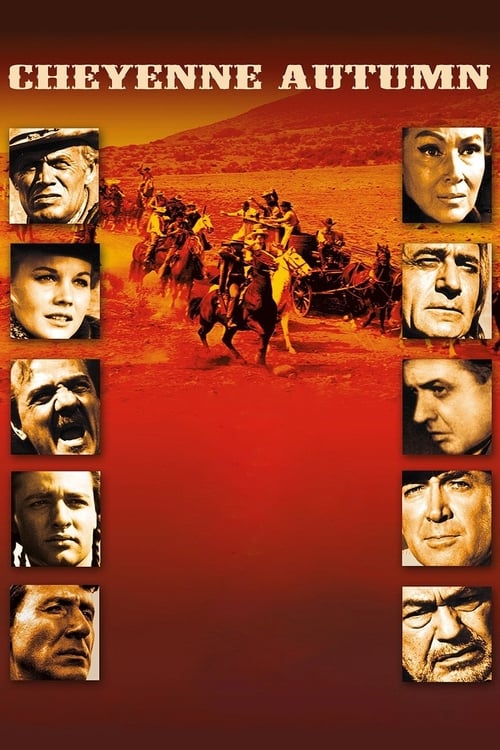
Cheyenne Autumn
Plot
A reluctant cavalry Captain must track a defiant tribe of migrating Cheyenne.
Get the Weekly Woke Watchlist
New and trending movies scored for woke bias, preachy messaging, and forced political themes — before you waste your evening.
No spam. One useful email per week.
Overall Series Review
Categorical Breakdown
The narrative is fundamentally based on a conflict between race and immutable characteristics, framing the plot as a historical justice lecture. The Cheyenne are depicted as the morally justified group, having been subjected to disease, starvation, and broken promises by the white government and military. White antagonists, such as the congressional committee and a sadistic fort commander, are portrayed as corrupt, inefficient, and arrogant, making them the explicit villains. The sympathy for the oppressed race is central to the entire plot's existence. However, the use of non-Native actors in all the major Cheyenne roles prevents a perfect score for this category.
The U.S. government, the military, and American institutions are explicitly framed as faithless, corrupt, and fundamentally hostile to a decent way of life, with a congressional delegation failing to show up due to a planned officers' ball. Officials are shown as having no respect for the land or their agreements. The narrative’s foundation is a strong critique of the ancestors' actions and Western civilization's treatment of the Native Americans. However, Captain Archer, the sympathetic white protagonist, fights his corrupt superiors and eventually influences a high-ranking official to achieve justice, which shows that a moral core within the Western system is redeemable.
The main female character, Deborah Wright, is an unmarried Quaker schoolteacher whose primary role is one of moral conviction and caregiving, choosing to dedicate her life to protecting orphaned Indian children rather than accepting a marriage proposal from the male lead. She acts independently on her conscience and has a clear moral purpose outside of a traditional wifely role. However, she is not portrayed as a 'perfect' or hyper-competent 'Girl Boss' figure; she is a moral guide, and reports suggest her character ultimately feels token or less central to the main plot.
The story contains a normative structure with a traditional heterosexual romantic subplot between the Captain and the Quaker teacher, as well as a love triangle conflict among the Cheyenne leaders. The narrative focuses on traditional male-female pairings and the struggle to protect the Cheyenne tribe's family unit. No themes of alternative sexualities, sexual ideology, or deconstruction of the nuclear family are present.
The Christian faith of the Quaker schoolteacher and her uncle is a clear source of benevolent moral action. Deborah Wright's Quaker faith compels her to look after the Cheyenne children and join the dangerous trek. Religious belief is thus portrayed positively as the very catalyst for compassion and defense of the oppressed.
Get the Weekly Woke Watchlist
New and trending movies scored for woke bias, preachy messaging, and forced political themes — before you waste your evening.
No spam. One useful email per week.